Why Emotional Spending Could Set You Back a Decade
20 October 2026
Let me start with a number that tends to get people's attention. If you take $400 a month, the kind of money that quietly leaks out through impulse buys, stress shopping, and "I deserve this" moments, and invest it instead at a 7 percent average annual return, you end up with roughly $480,000 after 30 years. Spend it on stuff you will not remember in 18 months, and you end up with a house full of objects and a retirement plan that looks like a shrug emoji.
That gap is the real story behind emotional spending. It is not about being bad with money. It is about the years of compounding you hand over every time a feeling gets routed through your credit card. The phrase "set you back a decade" is not marketing hyperbole. For a lot of households, it is a fairly precise description of what happens when emotional spending becomes a habit rather than an occasional slip.
This article is about how that mechanism works, why your brain keeps falling for it, and what to do about it without turning your life into a spreadsheet-themed monastery.
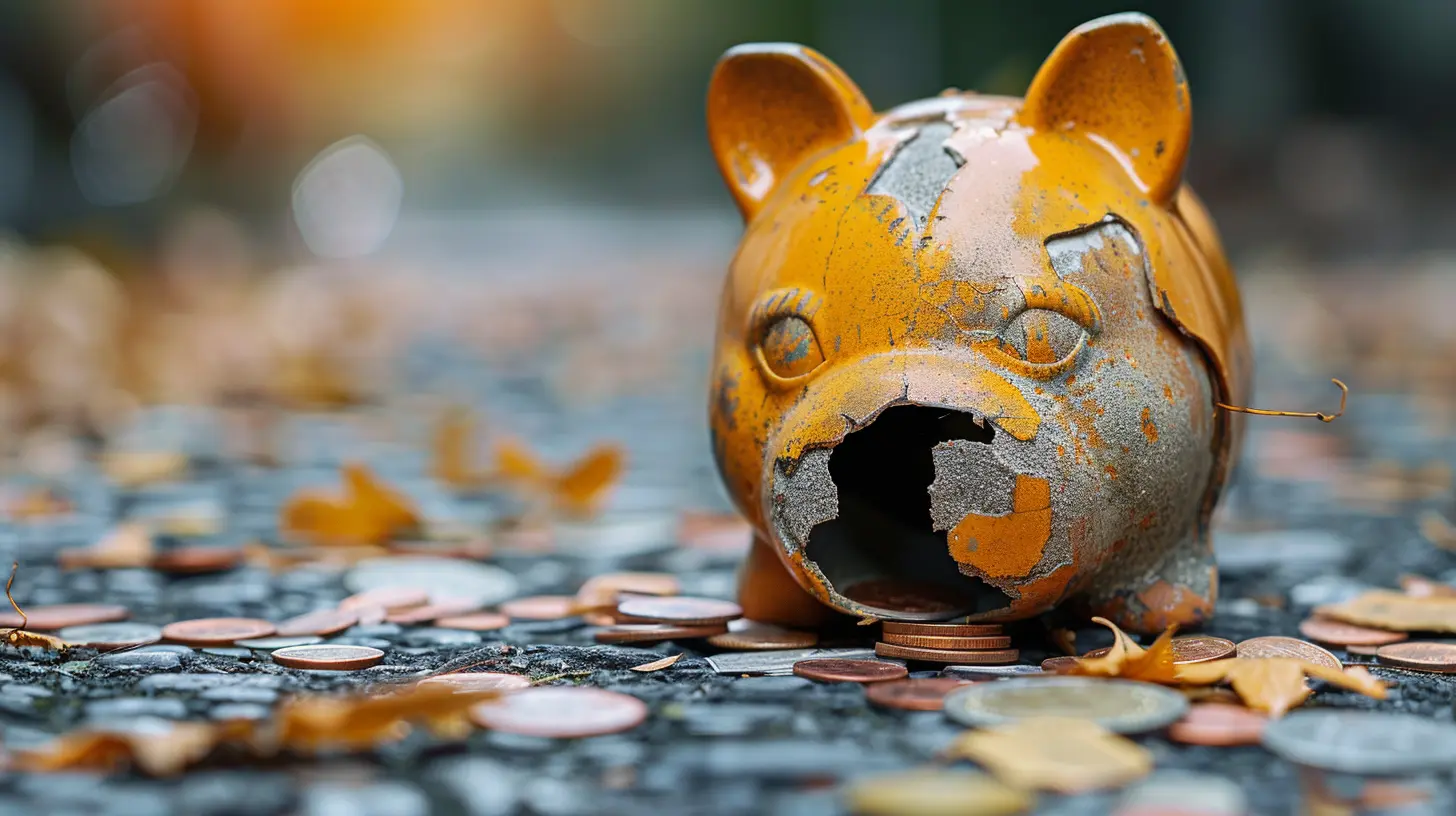
What Emotional Spending Actually Is (And What It Is Not)
Most people hear "emotional spending" and picture someone going on a shopping spree after a breakup. That is the cinematic version. The real version is quieter and far more common.Emotional spending is any purchase driven primarily by a feeling rather than a need or a considered plan. The feeling can be negative (stress, boredom, loneliness, anxiety, resentment) or positive (celebration, excitement, relief, a sense of reward). The tell is not the size of the purchase. It is the sequence: feeling first, purchase second, justification third.
It is not the same as buying something nice for yourself on purpose. A planned splurge, budgeted for and enjoyed without guilt, is not emotional spending. It is a choice. Emotional spending is when the cart fills itself before you have consciously decided anything.
It is also not the same as buying things you genuinely need. Replacing a broken washing machine is not emotional spending, even if it stings. Buying a third pair of running shoes because you had a rough week at work, when the first two are still in rotation, usually is.
The distinction matters because the fix is different. If your problem is overspending on needs, you have a budgeting problem. If your problem is spending to manage feelings, you have a coping problem that happens to have a price tag. Treating it as a budgeting problem is why so many people bounce off strict budgets and feel like failures.
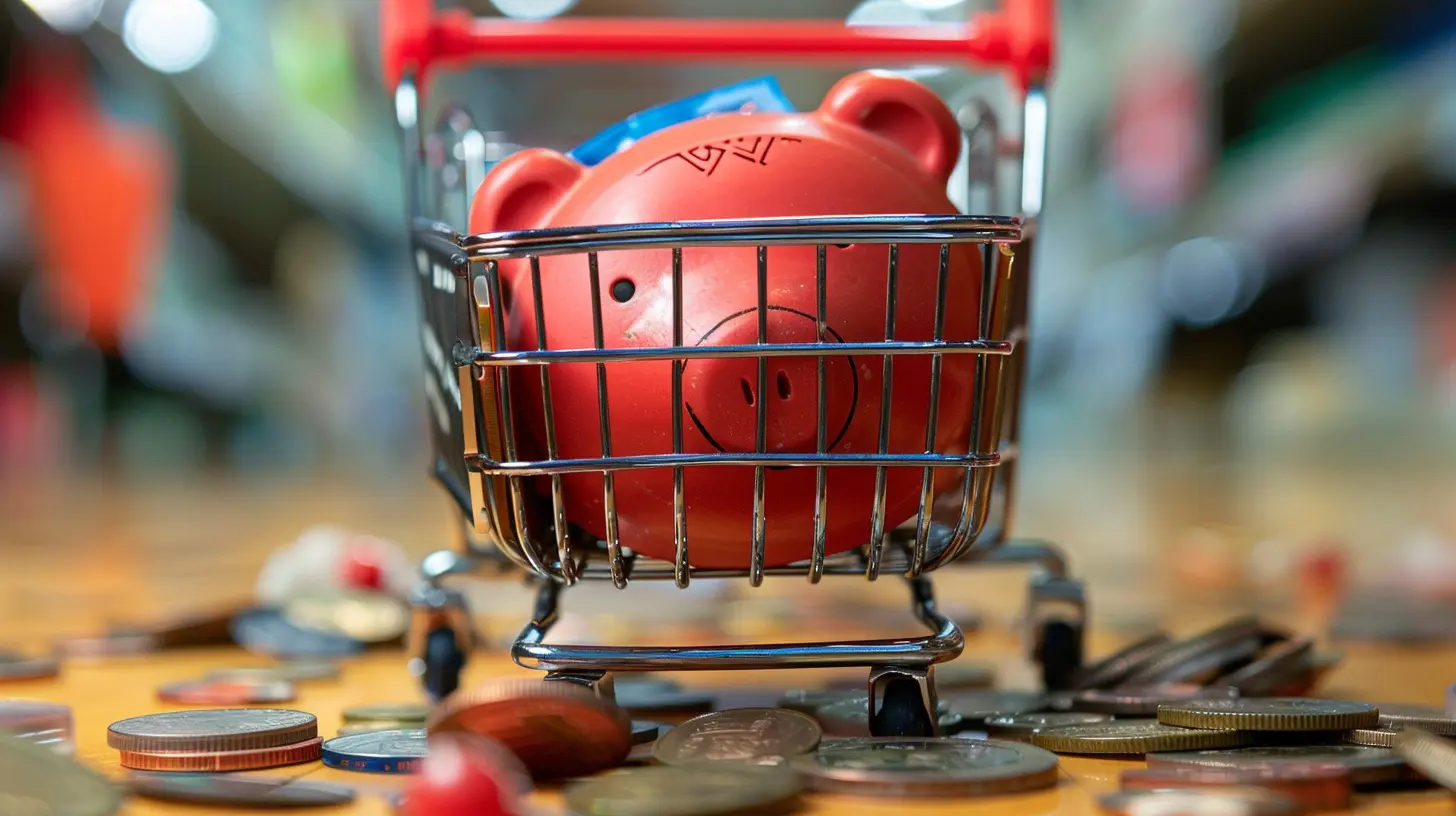
The Compounding Math Nobody Runs in Their Head
Here is the part that makes emotional spending genuinely expensive rather than merely annoying. Money spent has two costs: the amount itself and the future value of that amount. Most people only feel the first one.Consider three people with identical incomes and identical essential expenses. Each has $350 a month left over after bills.
Person A spends the $350 on unplanned purchases every month. Clothes, gadgets, takeout upgrades, the small stuff that never gets tracked. After 25 years, Person A has a lot of memories and very little else.
Person B puts the $350 into a diversified portfolio returning 6 percent annually. After 25 years, that is roughly $240,000. Not a fortune, but a meaningful buffer, a paid-off chunk of a home, or a retirement that does not depend entirely on a government pension.
Person C does something in between: spends half, invests half. After 25 years, roughly $120,000. Still life-changing relative to zero.
Now here is the uncomfortable part. Person A did not decide to be $240,000 poorer. They decided, 300 times over 25 years, that this month's $350 did not matter. Each individual decision felt trivial. The aggregate did not.
This is the decade problem. If you spend your 20s and 30s funding lifestyle inflation with emotional purchases, you are not just losing the money. You are losing the years during which that money would have compounded most aggressively. Time is the one input in the compounding equation you cannot buy back. A dollar invested at 30 has roughly twice the future value of a dollar invested at 40, assuming the same return. Emotional spending in your prime compounding years is the most expensive kind there is.

Why Your Brain Treats a Bad Day Like a Shopping Emergency
It helps to understand the machinery, because "just stop" is not a strategy.When you feel stress or sadness, your brain looks for relief. Spending money produces a small, fast hit of dopamine, the neurotransmitter associated with anticipation and reward. Notice the word anticipation. The pleasure peak often happens during the browsing and the buying, not during the owning. By the time the package arrives, the emotional payoff has usually faded, which is why the next bad day sends you back to the same well.
Retailers know this better than you do. Free shipping thresholds, limited-time offers, one-click checkout, and "you left something in your cart" emails are all engineered to shorten the gap between impulse and transaction. Every second you have to think is a second the impulse might die. The entire architecture of modern e-commerce is designed to remove those seconds.
There is also a social layer. Comparison spending, the quiet pressure to keep up with what friends, colleagues, and strangers on the internet appear to own, is emotional spending wearing a respectable outfit. It feels like keeping pace. It is actually paying rent on someone else's lifestyle.
And then there is the credit card effect. Paying with a card physically feels different from handing over cash. Research on payment methods has consistently suggested that people spend more freely when the payment is abstracted, and buy-now-pay-later products push that abstraction further by splitting the pain into smaller, less noticeable pieces. The purchase feels smaller than it is.

The Lifestyle Creep Trap
Emotional spending has a sneaky accomplice: lifestyle creep. Every raise, bonus, or windfall creates new baseline expectations. The gym membership you added after a promotion becomes a fixed cost. The nicer apartment becomes non-negotiable. The emotional purchases of today become the essential expenses of next year.This is why people who earn more are not automatically wealthier. Income growth without spending discipline just funds a more expensive version of the same financial situation. The person earning $60,000 and saving 15 percent is in a stronger position than the person earning $150,000 and saving nothing, because the second person has built a life that requires the full $150,000 to continue.
The decade math gets brutal here. Emotional spending that gets absorbed into your baseline is not a one-time cost. It is a permanent increase in your required income. Every future raise gets consumed before you see it. You are not just losing the money you spent. You are losing every future dollar that has to keep funding the lifestyle you accidentally built.
Real-World Examples That Show the Pattern
Abstract warnings are easy to ignore, so here are three composite scenarios drawn from patterns that show up again and again in personal finance coaching.The stress spender. A mid-level manager earning a solid salary has a demanding job. Every few weeks, after a particularly bad day, she buys something. A handbag, a skincare set, a weekend trip booked at 11 pm. Each purchase is small relative to her income, maybe $200 to $500. Over a year, that is somewhere between $6,000 and $12,000. She does not notice because no single purchase is alarming. After 10 years, with the compounding she missed, the gap is well into six figures. Her retirement plan is 12 years behind where it could have been.
The celebration spender. A young professional gets a bonus and immediately upgrades his car, his apartment, and his wardrobe. Each decision is defensible in isolation. Together, they consume the entire bonus and add $800 a month in fixed costs. Two years later, he is earning more than ever and saving less than he did before the promotion. The bonus did not make him richer. It made him busier.
The boredom spender. Someone working from home with a lot of unstructured time fills the gaps with browsing. Small purchases, $20 to $60, several times a week. The total is easy to miss because it never shows up as a single large transaction. But it is steady, and steady is exactly what compounds against you.
The common thread is not irresponsibility. It is invisibility. Emotional spending rarely announces itself. It hides in small amounts, in plausible justifications, and in the comfortable feeling that you can afford it. You probably can afford any single instance. You cannot afford the pattern.
The Opportunity Cost You Cannot See
One reason emotional spending persists is that the cost is invisible. You never get a statement showing what you did not invest. There is no notification when a future dollar disappears.A useful mental exercise is to translate purchases into future money. At a 7 percent return over 30 years, money roughly multiplies by 7.6. So a $100 purchase today is not a $100 purchase. It is a $760 decision. A $50 monthly subscription is not $600 a year. It is roughly $57,000 over 30 years, if invested instead.
This is not an argument for never spending money. That would be miserable and, frankly, unsustainable. It is an argument for spending deliberately. The question is not "can I afford this?" The question is "is this worth more to me than what it would become?" Sometimes the answer is yes. A great meal with people you love is worth more than $760 in 30 years. A third pair of shoes you will wear four times is not.
Why Budgets Alone Usually Fail
If emotional spending were a math problem, a budget would solve it. It does not, and there is a reason.A budget tells you what you are allowed to spend. It does not tell you what to do when you feel like spending. When the impulse hits, the budget is not in the room. Your feelings are. And feelings do not read spreadsheets.
This is why so many people set a strict budget, stick to it for three weeks, then blow through it in a single emotional weekend and abandon the whole thing. The failure is not a character flaw. It is a design flaw. The system addressed the symptom and ignored the cause.
Budgets work well for people whose spending is mostly planned and who need guardrails. They work poorly as the only tool for people whose spending is emotionally driven. For that group, the useful interventions are the ones that operate at the moment of impulse, not the ones that live in a spreadsheet on a Sunday evening.
Practical Strategies That Actually Work
Here is what tends to work, roughly in order of impact.1. Insert friction between feeling and buying
The single most effective intervention is delay. Remove saved card details from shopping sites. Unsubscribe from marketing emails. Delete shopping apps from your phone. Make the purchase require a few extra steps and a few extra minutes. Most emotional purchases do not survive a 24-hour delay. If you still want it tomorrow, it was probably a real want.Why it works: impulse is time-sensitive. Friction does not require willpower, which is unreliable. It changes the environment so the default is not buying.
2. Give the feeling somewhere else to go
Emotional spending is a coping mechanism. If you remove it without replacing it, the feeling will find another outlet, and that outlet might be worse. Build a short list of alternatives that actually work for you: a walk, a phone call, a workout, a bath, a specific playlist, a 10-minute journaling habit. The list needs to be specific and easy, because vague advice like "find a hobby" does not compete with one-click checkout.3. Separate spending money from feeling money
One approach that works well for many people is to keep a small, guilt-free "whatever" fund. A fixed amount each month that you can spend on anything, no justification required. This does two things. It satisfies the reward-seeking part of your brain, and it creates a boundary. Once the fund is gone, it is gone. You are not banning pleasure. You are capping its cost.Trade-off to consider: this requires some discipline to actually stop when the fund runs out. If you know you will not respect the boundary, a stricter approach, like a 48-hour rule on any non-essential purchase over a set amount, may work better.
4. Track your spending without judging it
Most people who think they know where their money goes are wrong by a meaningful margin. A single month of honest tracking, no judgment, just observation, is often enough to reveal the pattern. You are looking for the gap between what you thought you spent and what you actually spent. That gap is where the emotional spending lives.Do not turn this into a shame exercise. Shame is a terrible motivator and a reliable trigger for more emotional spending. Treat it as data collection.
5. Automate the money you want to keep
The most reliable way to protect your future is to move money out of reach before you can feel anything about it. Automate transfers to savings and investments on payday. Increase them with every raise. If the money never lands in your checking account, it never becomes available for an emotional purchase.Why it works: it removes the decision from the moment of temptation. You are not relying on discipline in the moment. You are relying on a decision you made once, when you were calm.
6. Address the underlying feeling
This is the hardest one and the most important. If your spending is driven by stress, loneliness, or anxiety, no amount of budgeting will fix it. That is not a money problem. It may be worth talking to a professional, or at minimum, being honest with yourself about what the purchases are actually doing for you. The answer is usually comfort, distraction, or a sense of control. Once you know which, you can look for cheaper ways to get it.Common Mistakes and Misconceptions
Misconception: emotional spending is a rich person's problem. It is not. It is arguably worse for people with less financial slack, because there is no buffer to absorb the damage. A $300 impulse purchase hurts a household with $500 in savings far more than one with $50,000.Mistake: going cold turkey. Banning all non-essential spending often backfires. It creates a deprivation mindset that makes the next impulse stronger. A small, planned allowance tends to be more sustainable than a total ban.
Mistake: using shame as fuel. Shame feels productive because it is uncomfortable, but it usually leads to more of the behavior you are trying to stop. It also makes you hide your spending, which makes it harder to track and fix.
Mistake: optimizing the wrong thing. Couponing and hunting for deals on things you did not need in the first place is not saving money. It is emotional spending with extra steps. A 30 percent discount on a $200 purchase you did not plan is still a $140 loss.
Misconception: a bigger income will solve it. It will not. If the behavior is emotional, a higher income simply raises the ceiling. The pattern follows the person.
What to Do Before Your Next Purchase
Before any non-essential purchase, run a quick check. It takes 20 seconds and it catches most of the damage.Ask yourself: what am I feeling right now? If the honest answer is stressed, bored, sad, or wired, the purchase is probably not about the item. Ask: would I want this if I were having a great day? Ask: what is this worth to me in 30 years? And finally: what would I think of this purchase in a week?
You do not need to pass every check. You need to notice when you fail them. Awareness is the whole game. The goal is not to eliminate pleasure from your life. It is to stop letting a bad Tuesday cost you a decade of compounding.
The good news is that the same math that works against you works for you. Every dollar you redirect from impulse to investment is a dollar that gets to compound for decades. You do not have to be perfect. You just have to be deliberate. And the earlier you start, the fewer years you hand over to a feeling you will not even remember.
all images in this post were generated using AI tools
Category:
Financial MistakesAuthor:

Knight Barrett