What You Can’t Afford to Get Wrong About Compound Growth
13 August 2026
Most people think compound growth is a math problem. It is not. It is a behavior problem dressed up in numbers. The formula is simple: principal times rate times time, with the interest earning interest of its own. But the real difficulty has nothing to do with calculating the future value of an investment. It has everything to do with how humans perceive time, risk, and delayed gratification.
If you misunderstand compound growth, you will not just miss out on returns. You will make decisions that actively destroy wealth. You will sell at the worst moments, buy at the worst moments, and confuse activity with progress. This article is about the parts of compound growth that textbooks gloss over and that financial influencers rarely mention, because those parts are uncomfortable.

The Exponential Curve Lies to You
The classic chart shows a slow, flat line that suddenly shoots upward after twenty or thirty years. People look at that chart and think, "I just need to wait." That is true, but it is also misleading. The chart does not show what it feels like to live through the flat part.The first ten years of compounding feel like failure. You contribute consistently, the market does its thing, and your balance grows, but not in a way that changes your life. You see friends buying houses, starting businesses, or taking extravagant vacations. Meanwhile, your spreadsheet shows a number that seems pathetically small relative to the effort you have put in.
This is where most people quit. Not because the math is wrong, but because the emotional payoff is delayed beyond what their patience can tolerate. The curve does not lie about the mathematics. It lies about the experience. The human brain is wired to overvalue immediate rewards and undervalue distant ones, a bias that behavioral economists call hyperbolic discounting. Compound growth demands that you fight this wiring every single day for years.
The practical takeaway is not to "think long term" as a vague mantra. It is to build systems that remove the need for constant willpower. Automate your contributions. Set up dividends to reinvest without looking at them. Check your portfolio quarterly instead of daily. If you rely on motivation to keep you invested, you will fail, because motivation is a feeling, and feelings change with the market.

The Real Variable Is Not Time, It Is Survival
Everyone repeats the mantra "time in the market beats timing the market." That is true, but it is incomplete. The full sentence should be: "Time in the market beats timing the market, provided you do not get wiped out along the way."Compound growth is not a straight line. It is a series of gains and losses that, when averaged out, produce a positive trend. But the arithmetic of losses is brutal. A 50 percent loss requires a 100 percent gain to get back to even. A 30 percent loss requires a 42.8 percent gain. The deeper the drawdown, the more the compounding engine has to work just to recover, let alone grow.
This is why risk management is not the boring part of investing. It is the core of compound growth. If you lose 40 percent of your portfolio in a crash and then panic-sell at the bottom, you have not just lost money. You have reset the clock. The years of contributions that built that capital are gone, and you have to start again from a lower base.
The professionals who manage endowments and pension funds do not think about maximizing returns. They think about avoiding catastrophic loss. They know that a single bad decision can undo decades of good decisions. The same logic applies to your personal portfolio, only more so, because you cannot print money or raise capital from limited partners.
What does this mean in practice? It means your asset allocation must be boring enough that you can actually stick with it. If you are 100 percent in stocks and you know you will panic during a 40 percent drawdown, then you are not invested in stocks. You are invested in a future panic. The correct allocation is not the one with the highest expected return. It is the one that lets you sleep at night and keep your hands off the sell button.
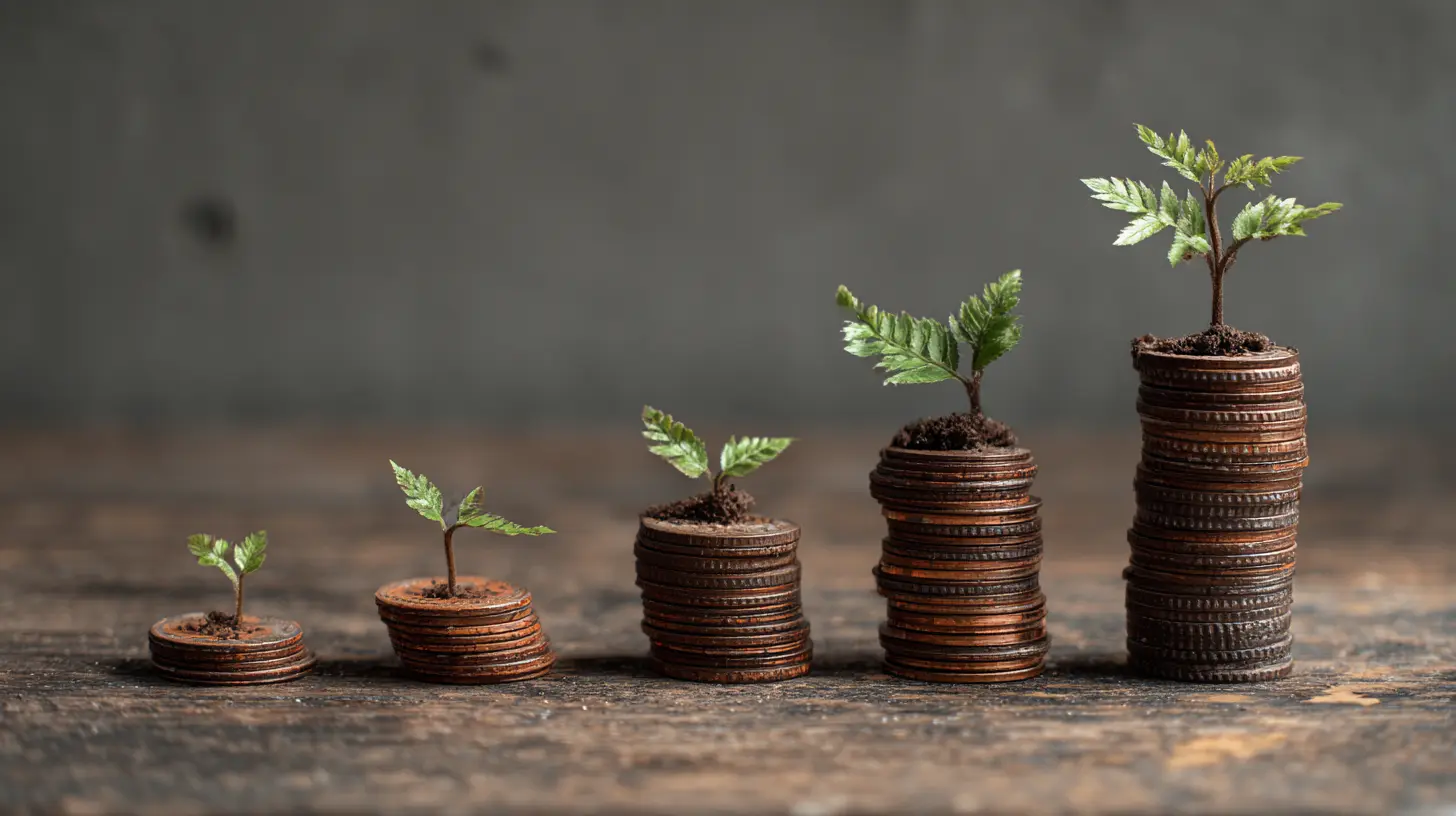
The Contribution Rate Matters More Than the Return Rate
Here is a counterintuitive fact that most people get wrong. In the early years of investing, the amount you save matters far more than the return you earn. Consider two investors. One saves 500 dollars a month and earns 12 percent annually. Another saves 1,500 dollars a month and earns 6 percent annually. After ten years, the second investor has significantly more money, despite earning half the return.The reason is simple. Early on, your contributions are large relative to your balance. A 20 percent return on a 10,000 dollar portfolio is 2,000 dollars. But if you add 12,000 dollars a year in contributions, your savings rate dwarfs your investment gains. The compounding engine needs fuel. The fuel is your earned income redirected into assets.
This has a profound implication. You cannot outsmart the market into wealth if you do not have a high savings rate. The person who obsesses over picking the perfect ETF but only saves 3 percent of their income will lose to the person who saves 30 percent of their income and invests in a plain index fund. This is not an argument against seeking good returns. It is an argument for prioritizing what you control: your spending and your contributions.
The flip side is that contributions become less important over time. After twenty years, your investment gains will dwarf your annual contributions. At that point, the return rate matters enormously. So the strategy should shift. Early on, focus on earning more, spending less, and automating the difference. Later, focus on capital preservation, tax efficiency, and avoiding mistakes. The person who saves aggressively in their twenties and thirties and then becomes conservative in their fifties is doing it right. The person who does the reverse is fighting the math.

The Frequency of Compounding Is a Distraction
You will see advertisements for accounts that compound daily, or even continuously. This is marketing, not substance. The difference between annual compounding and daily compounding is negligible over any realistic holding period. A 10 percent annual return compounded daily is effectively 10.52 percent. That extra half a percent is nice, but it is not going to change your life.What actually matters is the reinvestment of distributions. If you own a dividend-paying stock and you take the cash out to spend it, you are not compounding. You are just collecting income. If you reinvest that dividend, you are buying more shares, which will pay more dividends, which buy more shares. That is the engine of long-term wealth.
The same logic applies to interest payments on bonds, rental income from real estate, and capital gains from selling winners. If you withdraw the gains, you break the chain. The only way compound growth works is if the returns stay in the game. This sounds obvious, but watch what people actually do. They sell a stock that has doubled, take the profit, and buy a car. They have just converted a compounding asset into a depreciating liability.
A better mental model is to think of your portfolio as a farm. You do not eat the seeds. You eat the harvest, and you replant a portion of the harvest to ensure next year's crop. The people who get compound growth wrong are the ones who eat the seeds because they are hungry today.
Taxes Are a Silent Drag That You Can Control
Compound growth assumes that your returns are reinvested in full. In reality, taxes take a cut every time you realize a gain. This is why tax-advantaged accounts like 401(k)s, IRAs, and Roth accounts are not just a nice perk. They are a structural advantage that can double your ending wealth over a few decades.Consider an investor in a 25 percent capital gains tax bracket. If they earn 8 percent a year in a taxable account, their after-tax return is closer to 6 percent if they are selling and realizing gains. Over thirty years, the difference between 8 percent and 6 percent is enormous. A 10,000 dollar initial investment grows to about 100,000 dollars at 8 percent, but only 57,000 dollars at 6 percent. The tax drag is nearly half the ending value.
The solution is not to avoid taxes illegally. It is to use the legal structures available to you. Max out your tax-deferred accounts first. Use tax-loss harvesting in taxable accounts to offset gains. Hold investments for more than a year to qualify for long-term capital gains rates. Consider municipal bonds if you are in a high tax bracket. These are not exotic strategies. They are the basic mechanics of keeping more of your compound growth working for you.
The other tax issue is location. Assets that generate ordinary income, like bonds or REITs, are better held in tax-deferred accounts. Assets that generate capital gains, like stocks, are better held in taxable accounts where they can benefit from lower rates and step-up in basis at death. Getting this wrong does not ruin you, but it shaves off a percentage point or two each year. Over decades, that is a massive difference.
The Danger of Over-Optimization
There is a personality type that loves compound growth because it feels like a puzzle. They will spend hours comparing expense ratios, backtesting asset allocations, and reading white papers on factor investing. This is fine as a hobby, but it can become a trap.Over-optimization leads to paralysis. You spend so much time trying to find the perfect portfolio that you never actually invest. Or worse, you keep changing your strategy every time you read a new article, which means you constantly realize gains, pay taxes, and reset your holding periods. This is called churning, and it is a guaranteed way to underperform the market.
The best strategy is the one that is simple enough to execute without constant attention. A target-date fund, a three-fund portfolio, or even a single broad-market index fund is enough for most people. The extra percentage point you might gain from a more complex strategy is not worth the risk of making a mistake when the market gets volatile.
Remember that compound growth rewards consistency, not cleverness. The investor who stays invested in a mediocre fund for thirty years will beat the investor who jumps between brilliant funds every eighteen months. The first investor is compounding. The second is just spinning their wheels.
Inflation Is the Silent Thief That Nobody Prices In
When people talk about compound growth, they usually talk about nominal returns. But what matters is your real return, which is the nominal return minus inflation. If you earn 7 percent and inflation is 3 percent, your real return is 4 percent. That is the number that actually increases your purchasing power.This matters for two reasons. First, it means that cash is a terrible long-term investment. A savings account paying 0.5 percent while inflation runs at 3 percent is losing money every year in real terms. You are not growing wealth. You are slowly bleeding it.
Second, it means that you need to be aggressive enough in your asset allocation to outpace inflation. If you are too conservative, you might protect your principal in nominal terms, but you will lose purchasing power. The classic example is the retiree who keeps everything in bonds and then discovers that their fixed income buys less and less each year.
The correct response is not to panic or to chase high-yield investments. It is to understand that compound growth is a race against inflation. Your investments need to earn more than the inflation rate, plus a margin for taxes and fees, or you are just treading water. This is why stocks, with their historical long-term returns of 6 to 8 percent above inflation, are the only asset class that has consistently built real wealth over long periods.
The Psychology of the Down Year
The hardest test of your understanding of compound growth is not the good years. It is the bad years. When your portfolio drops 20 percent in a week, every instinct in your body tells you to sell and protect what is left. That instinct is wrong, but it is powerful.The truth is that drawdowns are not a bug in the compounding system. They are a feature. Markets do not go up in a straight line. They go up in a series of stairs, with occasional descents that clear out speculation and reset valuations. If you sell during the descent, you miss the next ascent. And because the ascent often happens quickly, a few weeks of being out of the market can cost you years of returns.
This is not speculation. It is a well-documented pattern. The best trading days often occur immediately after the worst trading days. The investor who stays fully invested through the 2008 crisis and the 2020 pandemic was rewarded handsomely. The investor who sold in March 2009 and waited for "things to stabilize" missed the recovery and often never got back in at the same level.
The way to survive these moments is not to be braver than everyone else. It is to have a plan that you write down in advance. The plan should say, "If the market drops 30 percent, I will do nothing." It should say, "I will rebalance once a year, not in response to news." It should say, "My time horizon is twenty years, and the price of the asset today is irrelevant to my decision to hold it."
If you cannot write that plan and stick to it, you do not actually understand compound growth. You understand the math, but not the behavior. And behavior is what determines outcomes.
The Compounding of Skills and Relationships
It would be a mistake to limit this discussion to money. Compound growth is a universal principle. It applies to your career, your health, and your relationships. The person who reads for twenty minutes a day for ten years has read the equivalent of hundreds of books. The person who exercises for thirty minutes a day has logged over 1,800 hours of physical activity. The person who invests in a marriage or a friendship with small daily acts of attention builds a bond that cannot be created in a single grand gesture.This is not a motivational platitude. It is a strategic insight. If you understand that small, consistent actions compound, you can apply the same framework to every part of your life. You stop looking for quick fixes and start looking for daily habits. You stop evaluating your progress on a weekly basis and start evaluating it on a yearly basis. You stop comparing your beginning to someone else's middle.
The mistake people make is to think that compound growth is a financial concept that requires a brokerage account. It is actually a philosophy of patience and consistency. The money is just the most measurable outcome.
The Cost of Waiting
The single most expensive sentence in personal finance is "I will start investing next year." The cost of waiting is not just the contributions you miss. It is the compounding of those contributions over decades.Consider two investors. Alice starts investing at 25, contributing 300 dollars a month until she is 60. Bob waits until 35, then contributes 500 dollars a month until he is 60. Assuming a 7 percent annual return, Alice ends up with more money, even though she contributed less total. Her advantage is not the amount she saved. It is the ten extra years of compounding.
This is why the best time to start was ten years ago, and the second best time is today. Every year you wait, the cost of catching up grows. You can contribute more later, but you cannot buy back the time that has already passed. The market does not care how much you want to retire. It only cares how long your money has been working.
If you are reading this and you are in your forties or fifties, do not despair. The math is less favorable, but it is not hopeless. You can still build significant wealth, but you need to be more aggressive with your savings rate and more disciplined with your risk management. You do not have the luxury of time to recover from mistakes. Every decision matters more.
The Final Misconception: That It Is Too Late
The last thing people get wrong about compound growth is that they think it is only for the young. This is false for two reasons. First, even a small amount of time is enough to make a meaningful difference. A 55-year-old who invests 1,000 dollars a month for ten years at 6 percent will have over 160,000 dollars. That is not nothing.Second, and more importantly, compound growth does not stop when you retire. It continues as long as your money is invested. The retiree who keeps their portfolio in a balanced allocation and only withdraws a sustainable amount can continue to grow their wealth in absolute terms, even while drawing income. The key is to avoid the sequence-of-returns risk, which is the danger of withdrawing money during a market downturn. That is a solvable problem with proper planning and a cash buffer.
The real mistake is not starting late. It is never starting at all. The person who starts at 60 and lives to 90 still has thirty years of potential compounding ahead of them. That is an eternity in financial terms.
Practical Rules to Live By
If you take nothing else from this article, take these rules. First, automate your contributions so that you never see the money. Second, invest in a diversified portfolio that matches your risk tolerance, not your fantasy of being a daredevil. Third, reinvest all distributions. Fourth, minimize taxes and fees. Fifth, write down your investment policy and refuse to change it in response to market noise. Sixth, measure your progress in years, not days.Compound growth is not a secret. It is not a hack. It is the slow, unglamorous, and mathematically certain result of consistent action over a long period. The people who benefit from it are not the smartest or the luckiest. They are the ones who do not quit.
The problem is that the curve is flat for so long that most people conclude it is broken. They abandon the process just before the exponential phase kicks in. Do not be that person. Understand that the flat part is not a failure. It is the foundation. And the foundation is where the real work happens.
all images in this post were generated using AI tools
Category:
Financial MistakesAuthor:

Knight Barrett
Discussion
rate this article
1 comments
Caelum McKeehan
Great insights on compound growth. I learned a lot!
August 17, 2026 at 2:56 AM
Knight Barrett
Thanks for your feedback! I'm glad you found it helpful.