The Psychology Behind Paying Off Debt and Staying Motivated
9 September 2026
Debt is rarely just a math problem. If it were, the solution would be simple: spend less than you earn, send every extra dollar to the highest interest rate, and wait. But millions of people know the formula and still struggle. The reason is that debt lives in the emotional parts of the brain as much as it does in a spreadsheet. Understanding how your mind reacts to owing money, making payments, and seeing progress is the difference between a short-lived burst of discipline and a lasting transformation.

Why Debt Feels Heavier Than a Number
When you owe money, you are not just carrying a financial obligation. You are carrying a story about yourself. For many, debt feels like a personal failure, even when it was caused by a medical emergency, a job loss, or the simple cost of living outpacing wages. That shame creates a powerful psychological loop. You avoid looking at your balances because it hurts. The longer you avoid them, the more out of control they feel. And the more out of control they feel, the deeper the shame gets.This is called the ostrich effect, and it is one of the most common reasons people stay in debt far longer than necessary. The brain perceives the act of checking your bank account or credit card statement as a threat. It triggers the same stress response as a physical danger. So you scroll past the notification, you throw the bill on the counter, and you tell yourself you will deal with it later. Later never comes.
The first step in breaking this cycle is not creating a budget. It is changing your relationship with information. You need to look at your debt not as a judgment on your character but as a set of data points. When you can separate your self-worth from your net worth, you can finally see the problem clearly enough to solve it.

The Motivation Trap: Why Willpower Is Not Enough
Most people start a debt payoff plan with a burst of enthusiasm. They cut expenses, sell things, pick up extra shifts. For the first few weeks, it feels great. Then the novelty fades. The sacrifices start to feel like punishments. And one bad day, a car repair or an impulse purchase, derails everything.This happens because willpower is a finite resource. It is not a character trait you either have or lack. It is more like a muscle that gets tired with overuse. When you rely on willpower alone, you are asking yourself to make the right decision hundreds of times a day. Every time you say no to a purchase, you drain a little more energy. By the end of the day, your resistance is low, and the easiest choice wins.
The solution is not to become stronger. It is to design your environment so that you do not need to be strong. This is the core principle behind successful debt payoff strategies. You automate your payments so you never have to decide whether to send the money. You remove saved credit card numbers from your browser so that buying something online requires friction. You unsubscribe from store emails that tempt you with sales. You tell your friends you are not eating out for six months so that you do not have to negotiate with yourself in the moment.
Willpower is for emergencies. Systems are for everyday life. When you stop relying on your own discipline and start relying on your environment, the process becomes sustainable.

The Snowball vs. Avalanche Debate: More Than Math
There are two popular methods for paying off multiple debts. The avalanche method says to pay off the debt with the highest interest rate first. The snowball method says to pay off the smallest balance first, regardless of interest. The math clearly favors the avalanche. You save more money in interest over time. But the psychology often favors the snowball.The reason the snowball works for so many people is that it provides quick wins. Paying off a small credit card balance in three months gives you a sense of accomplishment that a large student loan balance cannot. That feeling of progress releases dopamine in the brain. It reinforces the behavior. You want to keep going because you have proof that your actions matter.
The avalanche method, while financially superior, can feel like running on a treadmill. You make large payments for months and the balance barely moves because the interest is eating most of it. This is especially true for high-interest debts. If you are the type of person who needs visible progress to stay engaged, the avalanche method might cause you to give up entirely. That is a far worse outcome than paying a little more in interest.
A better approach is to combine the two. Look at your debts and find the one with the smallest balance that also has a relatively high interest rate. If there is no such debt, then decide what matters more to you: saving money or staying motivated. There is no universally correct answer. There is only the answer that keeps you moving forward.
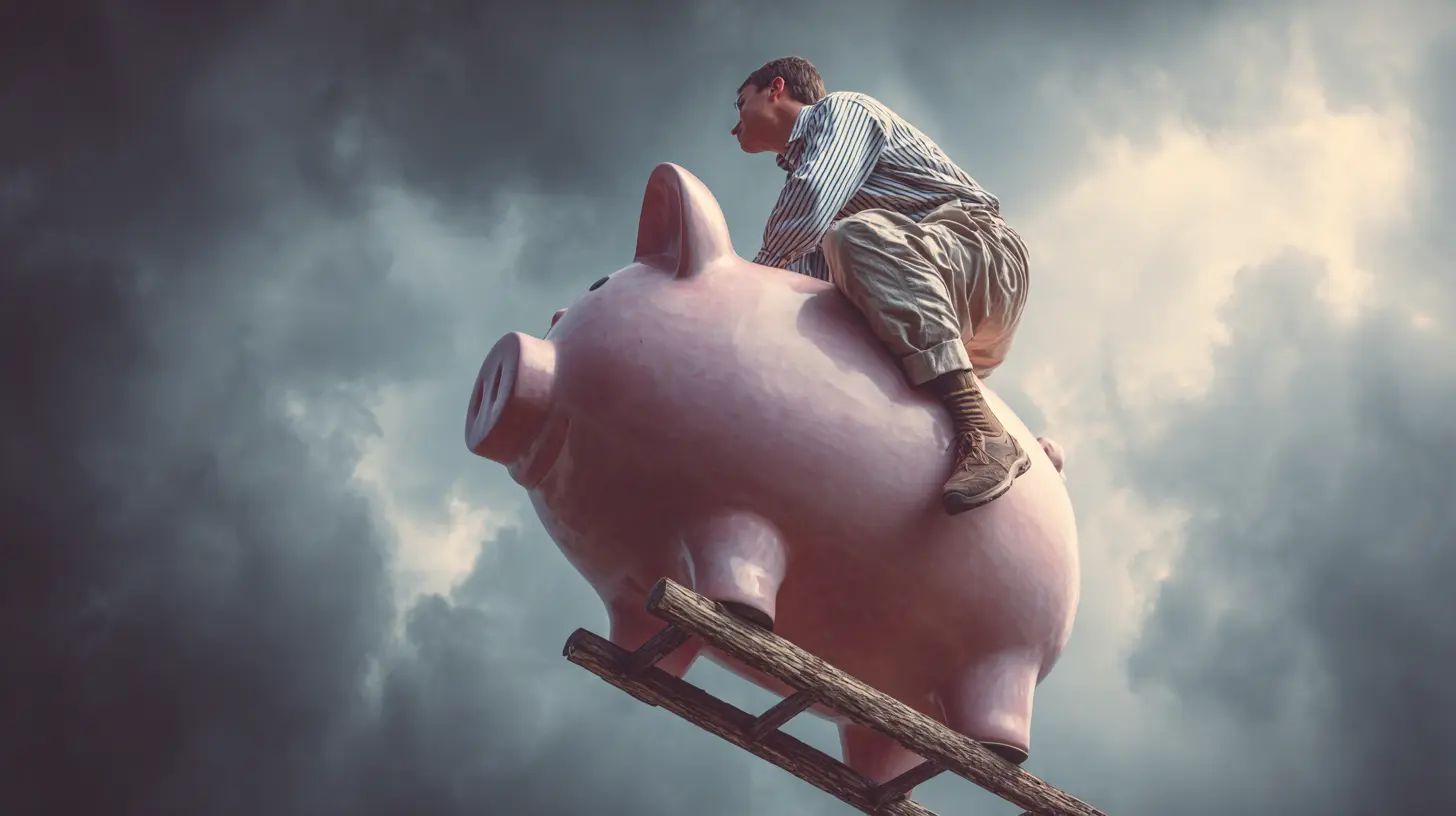
The Real Reason People Fall Off the Wagon
Many people assume that those who relapse into debt lack discipline. But the more common reason is that they never built a buffer for life's unpredictability. They put every spare dollar toward debt, leaving nothing for emergencies. Then the car breaks down, or the roof leaks, or a family member needs help. They put it on a credit card, and suddenly they are right back where they started.This is not a failure of motivation. It is a failure of planning. The human brain needs to feel safe before it can commit to long-term goals. If you are one unexpected expense away from disaster, your brain will constantly be in survival mode. That makes it nearly impossible to stick to a plan that requires delayed gratification.
The fix is counterintuitive but essential: build an emergency fund before you aggressively pay off debt. Even a small one, say one thousand dollars, can change your psychology. It gives you a cushion. It means that a flat tire is an inconvenience, not a crisis. Once you have that foundation, you can start putting extra money toward debt. And if you have to use the emergency fund, do not see it as a failure. See it as the system working exactly as designed.
How to Stay Motivated When Progress Feels Invisible
One of the hardest parts of paying off debt is that the early months feel like nothing is happening. You send a large payment, and the balance drops by a tiny amount. This is especially true for large debts like mortgages or student loans. The gap between what you are doing and what you can see is wide enough to discourage almost anyone.The trick is to change what you measure. Instead of only tracking the total balance, track the percentage of the debt you have paid off. Track the number of payments you have made. Track the interest you have avoided by paying early. Track your net worth, which includes your assets and savings, not just your liabilities. These smaller metrics give your brain the feedback it needs to stay engaged.
Another powerful technique is to visualize the end state in concrete terms. Do not just say "I want to be debt free." That is too abstract. Say "In eighteen months, I will have an extra six hundred dollars a month that I can put toward a down payment on a house." Or "I will be able to take a vacation without checking my balance first." The more specific and vivid the goal, the more your brain treats it as something real worth working toward.
The Role of Identity in Debt Repayment
Psychologists have found that people are more likely to stick with a behavior when it becomes part of their identity. Someone who says "I am trying to quit smoking" is less successful than someone who says "I am a non-smoker." The first is a struggle. The second is a fact.The same applies to debt. If you say "I am trying to pay off my credit card," you are still defining yourself as someone who has credit card debt. If you say "I am a person who lives within my means," you are defining yourself by your values, not your circumstances. This shift in language changes your decisions. When you are a person who lives within your means, you do not have to deliberate over whether to buy something. The answer is already built into your identity.
This is not about pretending you are not in debt. It is about recognizing that debt is something you have, not something you are. When you separate your identity from your financial situation, you stop making decisions based on guilt or shame. You make them based on who you want to be.
Common Mistakes That Sabotage Progress
One of the most common mistakes is trying to pay off debt too quickly. People get excited and put every spare dollar toward their balances. They eat rice and beans, cancel all subscriptions, and say no to every social event. This works for a month or two. Then the deprivation becomes unbearable, and they binge. They go on a shopping spree or take an expensive vacation to "reward" themselves for being so good. The debt goes right back up, often higher than before.A better approach is to find a pace you can sustain. This means leaving room in your budget for some fun. It means allowing yourself a small treat every week, whether that is a coffee, a movie rental, or a cheap takeout meal. The goal is not to suffer for a year. The goal is to build a new way of living that you can maintain for decades.
Another mistake is comparing your journey to others. Someone on the internet paid off fifty thousand dollars in a year. Someone else did it in six months. These stories are motivating, but they are also misleading. You do not know their income, their expenses, their family support, or their luck. Your journey is your own. The only comparison that matters is between where you are now and where you were six months ago.
The Hidden Cost of Minimum Payments
Minimum payments are one of the most dangerous tools in the debt industry. They are designed to keep you in debt for as long as possible while collecting as much interest as possible. When you only pay the minimum, you are barely covering the interest. The principal barely moves. This is not a moral failing on your part. It is a structural design.Understanding this changes how you think about extra payments. Every dollar you pay above the minimum is not just a dollar. It is a dollar that will never accrue interest again. It is a dollar that shortens the life of your debt. When you look at it that way, an extra fifty dollars a month is not a sacrifice. It is an investment in your future freedom.
Many people also misunderstand the order in which to pay off debts. They think they should pay off the smallest balance first because it feels good. Or they think they should pay off the one with the highest interest rate because it is mathematically correct. But they often forget to consider the emotional weight of each debt. A debt to a family member feels different from a debt to a bank. A debt from a failed business feels different from a debt from a medical emergency. Acknowledge those feelings. They matter.
When to Seek Help
There is a misconception that asking for help means you have failed. The opposite is true. Recognizing that you need support is a sign of self-awareness. A credit counselor can help you negotiate lower interest rates. A financial therapist can help you address the underlying emotional patterns that led to overspending. A trusted friend or family member can provide accountability without judgment.If your debt is overwhelming, consider whether debt consolidation or a balance transfer makes sense. These tools are not magic. They can lower your interest rate and simplify your payments, but they do not address the root cause. If you consolidate your debt and then continue your old spending habits, you will end up in a worse position. The tool is only useful if you are also changing your behavior.
Bankruptcy is another option that many people avoid discussing. It is not a moral failure. It is a legal process designed to give people a fresh start. It has serious consequences, including damage to your credit score and difficulty getting loans in the future. But for some people, it is the only realistic path forward. If you are considering it, speak with a qualified professional. Do not make that decision based on shame or pride.
The Emotional Payoff of Being Debt Free
People often focus on the financial benefits of paying off debt, like having more money for savings or retirement. But the emotional benefits are just as important. Being debt free means you can leave a job you hate. It means you can say no to a family member who asks for a loan. It means you can sleep through the night without worrying about bills. It means you have options.That sense of freedom is not automatic. Many people pay off their debt and then feel lost. They have spent years focused on a single goal, and now that goal is gone. They need a new one. This is why it is important to have a plan for what comes after debt. Do you want to build an emergency fund? Save for a house? Invest for retirement? Start a business? Having a clear next goal keeps the momentum going.
It is also common to feel a period of adjustment. You are so used to scarcity that you do not know how to handle abundance. You might feel anxious about spending money even when you have it. This is normal. Give yourself time to adjust. Start small. Allow yourself to enjoy the fruits of your labor without guilt.
Practical Strategies for Long-Term Motivation
The most effective strategies are the ones that work with your brain, not against it. Here are some approaches that have helped many people stay on track.First, make your progress visible. Create a chart or a spreadsheet that shows your debt going down over time. Put it somewhere you will see it every day. The visual reminder of your progress is more powerful than any abstract number in a bank statement.
Second, celebrate milestones. When you pay off a credit card, do something to mark the occasion. It does not have to be expensive. Cook a nice meal, take a hike, or buy yourself a small gift. The point is to acknowledge your achievement. This reinforces the behavior and makes the process feel rewarding.
Third, find a community. Whether it is an online forum, a local support group, or a friend who is also paying off debt, having people who understand what you are going through makes a difference. They can offer advice, encouragement, and accountability. They can also remind you that you are not alone.
Fourth, revisit your "why" regularly. Write down the reasons you want to be debt free. Read them out loud every week. When you feel tempted to give up, remind yourself of the life you are building. The temporary pleasure of a purchase is not worth the long-term pain of staying in debt.
Fifth, forgive yourself. If you slip up, do not spiral into self-criticism. Acknowledge the mistake, figure out what went wrong, and make a plan to avoid it in the future. One bad day does not erase months of good work. The people who succeed are not the ones who never fail. They are the ones who get back up.
The Difference Between Motivation and Discipline
Motivation is what gets you started. Discipline is what keeps you going. Motivation is an emotion. It comes and goes. Discipline is a habit. It stays with you even when you do not feel like it.The mistake many people make is waiting for motivation to strike. They think they need to feel inspired before they can take action. But action comes first. Motivation follows. When you take a small step, even a tiny one, you create momentum. That momentum generates the feeling of motivation. The reverse does not work.
This is why the most successful debt payoff plans are boring. They do not rely on excitement or inspiration. They rely on routine. You make the same payment every month. You check your budget at the same time every week. You review your progress at the same time every quarter. The routine becomes automatic. And automatic behaviors are the ones that last.
A Final Word on Patience
Paying off debt takes time. It takes longer than you want it to. It takes longer than it feels like it should. There will be months when you make progress and months when you do not. There will be setbacks and surprises. That is not a sign that you are failing. That is a sign that you are human.The people who succeed are not the ones who never face obstacles. They are the ones who keep going despite them. They understand that the journey is not linear. They accept that there will be good days and bad days. And they keep making the next payment, and the next one, and the one after that.
One day, you will make your final payment. You will look at the zero balance on your screen. And you will realize that the money was never the real goal. The real goal was proving to yourself that you could do something hard. That you could change your behavior. That you could take control of your life. And that is a feeling that no amount of money can buy.
all images in this post were generated using AI tools
Category:
Paying Off DebtAuthor:

Knight Barrett
Discussion
rate this article
2 comments
Siena Bryant
I found this article really insightful. Understanding the emotional aspects of paying off debt can make a huge difference. It's a journey, and every small step counts... Thank you!
September 23, 2026 at 11:02 AM
Knight Barrett
I'm glad you found it insightful! Understanding emotions can truly transform the debt payoff journey. Thanks for sharing your thoughts!
Caleb McIntyre
Understanding the psychological factors in debt repayment can really boost motivation. Small victories can create a positive mindset, making the journey to financial freedom easier.
September 16, 2026 at 4:39 AM
Knight Barrett
Absolutely, small wins can shift our mindset and propel us forward. Celebrating those victories makes the path to financial freedom much more rewarding.