The Global Supply Chain Reset and Its Market Impact
6 October 2026
For roughly three decades, the global economy ran on a simple operating assumption: goods could be designed in one country, manufactured in another, assembled in a third, and sold everywhere, with costs falling year after year. That assumption shaped corporate strategy, capital allocation, and the entire architecture of modern financial markets. It is now being rewritten.
The global supply chain reset is not a single event or a short-term disruption. It is a structural reconfiguration of how and where the world produces, moves, and stores physical goods. It touches corporate margins, inflation dynamics, currency flows, industrial policy, and the pricing of assets from freight futures to semiconductor equities. Anyone who allocates capital, manages a business, or simply holds a diversified portfolio has exposure to this shift, whether they realize it or not.
This article breaks down what is actually changing, why it matters for markets, and how to think about the trade-offs rather than chasing headlines.
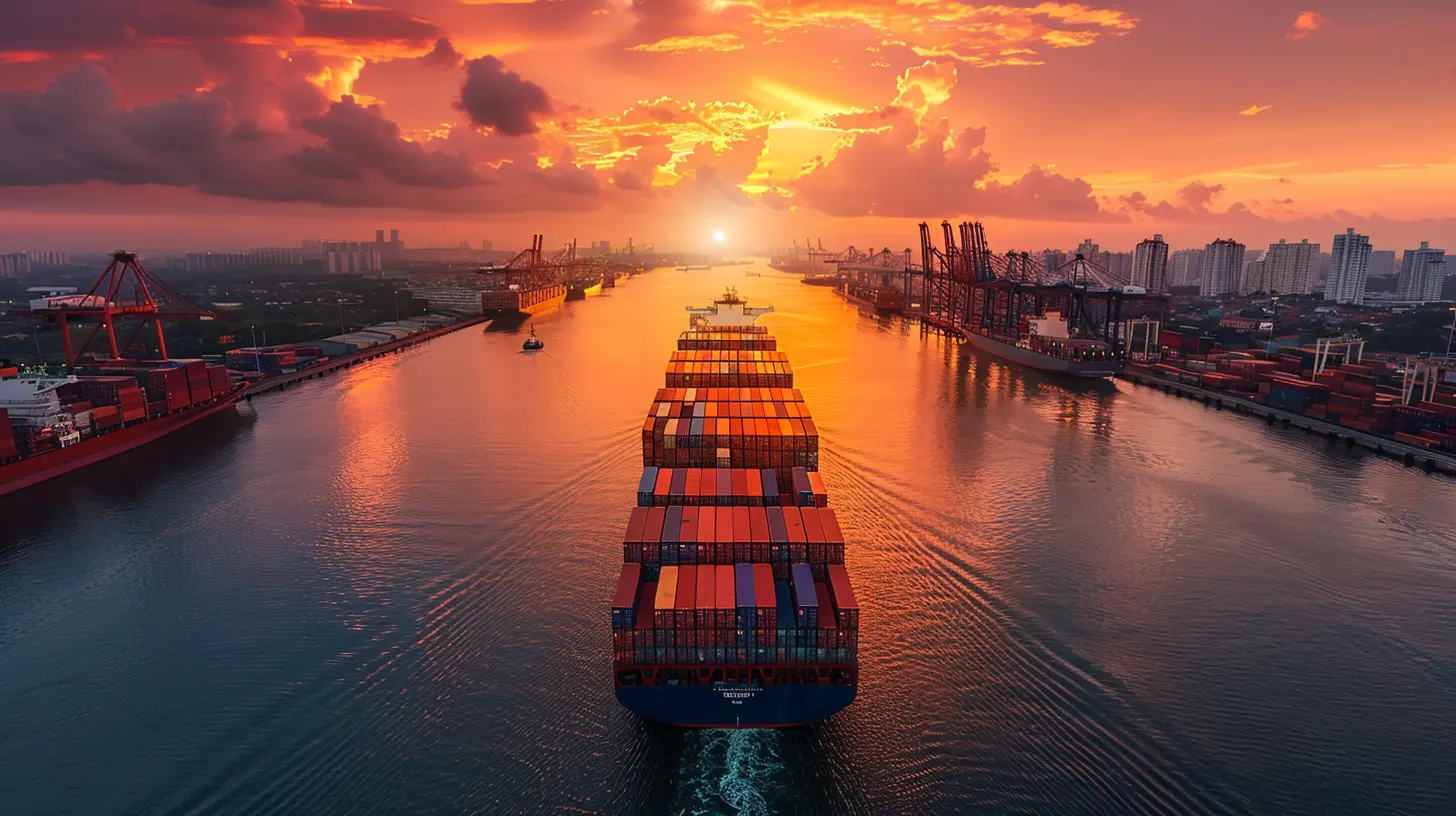
What the Supply Chain Reset Actually Means
The phrase "supply chain reset" gets used loosely. Stripped of buzzwords, it describes several overlapping transitions happening at once.The first is a shift from pure cost optimization to a blend of cost, resilience, and political safety. For decades, the dominant logic was just-in-time inventory: hold as little stock as possible, source from the cheapest credible supplier, and let global logistics absorb the rest. That logic has not disappeared, but it is now balanced against the risk of a single point of failure shutting down an entire production line.
The second transition is geographic diversification. Rather than concentrating manufacturing in one dominant hub, companies are spreading production across multiple countries and regions. This is often described as "China plus one" or "multi-shoring," though the reality is messier than the slogans suggest.
The third is the return of industrial policy as a market force. Governments are now actively subsidizing domestic production of strategic goods, imposing export controls, and using tariffs as tools of economic statecraft. This injects political variables directly into corporate supply decisions in a way that was less pronounced during the hyper-globalization era.
These three forces interact. A tariff raises the cost of importing from one country, which pushes a company to build capacity elsewhere, which then requires government incentives to be economically viable, which in turn reshapes competitive dynamics across an entire industry.
Why This Is Happening Now
It would be a mistake to attribute the reset to any single shock. Several pressures accumulated and reinforced each other.The pandemic exposed how fragile tightly coupled supply networks could be. When a factory in one region shut down, the effects rippled through automotive, electronics, and medical supply chains within weeks. Inventories that looked efficient on a spreadsheet turned out to be dangerously thin.
Geopolitical tensions added a second layer. Export restrictions on advanced technology, sanctions regimes, and concerns about depending on a single source for critical inputs pushed governments and boards to treat supply security as a strategic issue rather than a procurement detail.
Climate and logistics shocks compounded the problem. Extreme weather, drought affecting major shipping routes, and congestion at key ports demonstrated that physical infrastructure itself carries risk.
Finally, labor cost convergence played a quieter role. As wages rose in traditional manufacturing hubs, the cost advantage that drove offshoring in the 1990s narrowed. In some categories, the savings from moving production closer to the end market now outweigh the savings from chasing the lowest wage.
The result is not deglobalization. Trade volumes have not collapsed. What is happening is a reconfiguration: different routes, different partners, different priorities.
The Financial Plumbing Behind the Shift
To understand the market impact, you have to understand how supply chains connect to capital.When a company decides to move production, it does not simply sign a new contract. It commits capital. Building a factory, qualifying a new supplier, and duplicating tooling are expensive and slow. These decisions show up as higher capital expenditure and, in the short term, lower free cash flow. Investors who expect the same margin profile as the pre-reset era may be disappointed.
Working capital also changes. More inventory on hand, more suppliers, and longer qualification cycles mean more cash tied up in the business. That is a drag on returns unless it is offset by pricing power or government support.
Then there is the cost of redundancy. Running two suppliers instead of one, or two factories instead of one, is inherently less efficient at the unit level. The justification is that the expected cost of a disruption is higher than the cost of redundancy. This is a rational trade, but it is not free. Someone pays for it, and that someone is usually the end customer or the shareholder.
Inflation, Margins, and the New Cost Baseline
One of the most important market implications is that the deflationary pressure that global supply chains exerted for decades is weakening.From the 1990s through the 2010s, offshoring to low-cost regions pushed goods prices down and helped central banks keep inflation contained. As companies diversify and duplicate capacity, some of that downward pressure reverses. This does not mean runaway inflation, but it does mean a higher floor for goods prices than the previous era implied.
For equity investors, the key question is who can pass these costs on. Companies with strong brands, differentiated products, or essential inputs can raise prices without losing volume. Commodity producers with no pricing power absorb the cost and see margins compress. The reset therefore widens the gap between strong and weak businesses within the same sector.
For bond investors, the implication is subtler. If goods inflation is structurally higher, the neutral interest rate may be higher than the post-2008 consensus assumed. That affects the valuation of long-duration assets, including growth equities and long-dated government bonds.
Winners and Losers Across Sectors
The reset does not create uniform outcomes. It redistributes advantage.Logistics and shipping. Longer and more complex routes can support freight demand, but the picture is uneven. Companies that invested in flexible networks and digital visibility tools tend to fare better than those locked into fixed routes.
Industrial automation. Moving production to higher-wage countries only makes sense if automation closes the cost gap. This creates durable demand for robotics, sensors, and factory software.
Semiconductors. Because chips are both strategically critical and geographically concentrated, they sit at the center of the reset. Governments are subsidizing fabrication capacity, but building a leading-edge plant takes years and enormous capital. The risk of overcapacity in trailing-edge nodes is real.
Consumer goods. Companies with diversified sourcing and flexible pricing power can manage. Those dependent on a single low-cost country for a large share of their cost base face a harder adjustment.
Emerging markets. Countries positioned as alternative manufacturing hubs may benefit from new investment. But the benefits are not automatic. They require infrastructure, skilled labor, stable governance, and reliable energy. Countries that lack these will struggle to capture the shift.
The Investor's Playbook: What to Watch and What to Avoid
There is no single correct way to position for the reset, because the outcomes depend on policy decisions, technology adoption, and corporate execution that are still unfolding. But a few principles hold.First, distinguish between narrative and earnings. Many companies tell a compelling story about reshoring or supply chain resilience without showing it in their financials. Look for capital expenditure discipline, return on invested capital trends, and evidence that new capacity is actually being utilized.
Second, be skeptical of one-sided bets. A pure "reshoring winner" portfolio ignores that the transition is slow and that many incumbents retain deep advantages in scale and know-how.
Third, watch the second-order effects. Higher inventory levels affect working capital. Higher capex affects free cash flow. Higher costs affect pricing. These are the channels through which the reset actually reaches portfolios.
Fourth, respect the policy variable. Subsidies and tariffs can change the economics of an entire industry overnight. That cuts both ways. A project that looks viable under current incentives may collapse if the political winds shift.
Common Mistakes and Misconceptions
A few errors show up again and again.Mistake one: treating reshoring as a binary. In reality, most companies are not bringing all production home. They are adding redundancy and shifting some volume. The nuance matters for modeling.
Mistake two: assuming the transition is fast. Building new supply chains takes years, sometimes a decade for complex products. Investors who expect immediate earnings impact are usually early.
Mistake three: ignoring execution risk. Announced projects are not completed projects. Cost overruns, permitting delays, and labor shortages are common.
Mistake four: confusing supply chain shifts with trade collapse. Global trade is reconfiguring, not vanishing. The volume may persist while the routes change.
Misconception: automation eliminates the cost problem. Automation reduces labor cost sensitivity, but it introduces capital intensity, maintenance costs, and technical risk. It is a trade, not a free lunch.
Practical Steps for Businesses
For operators rather than investors, the reset demands a different kind of planning.Start by mapping your true dependencies. Most companies know their tier-one suppliers but not their tier-two and tier-three. A disruption three layers down can still stop your line.
Then stress-test scenarios. What happens if a key route closes for six months? What if a supplier's country faces export controls? The goal is not to predict the future but to know your exposure.
Next, decide deliberately where redundancy is worth the cost. Not every input needs a backup supplier. The ones that do are those with long lead times, no substitutes, and high disruption cost.
Finally, build relationships with governments and regulators early. In an era of industrial policy, being at the table matters. Companies that engage constructively on incentives and compliance tend to capture more of the available support.
What Comes Next
The reset is not a destination. It is an ongoing process that will evolve with technology, politics, and economics. Three developments are worth watching.Artificial intelligence and advanced analytics are making supply chains more visible and more adaptable. Better forecasting reduces the need for pure buffer inventory, which partially offsets the cost of diversification.
Energy availability is becoming a decisive factor in where production locates. Countries with abundant, cheap, and reliable power have a structural advantage in energy-intensive manufacturing.
Demographic shifts will shape labor availability. Aging workforces in some regions and young populations in others will influence where capacity can realistically be built and operated.
None of these forces is deterministic. They interact, and the outcomes will surprise most forecasters. The prudent approach is to stay informed, avoid overconfidence, and build flexibility into both portfolios and operations.
The global supply chain reset is one of the defining economic stories of this decade. It will not unfold in a straight line, and it will not produce obvious winners and losers. But it will reshape costs, margins, and capital flows in ways that reward investors and operators who think in terms of trade-offs rather than slogans.
all images in this post were generated using AI tools
Category:
Market AnalysisAuthor:

Knight Barrett