How to Stop Living Paycheck-to-Paycheck While Paying Off Debt
1 September 2026
You are not bad with money. You are just stuck in a system that rewards the lender and punishes the borrower. Living paycheck-to-paycheck while carrying debt is not a character flaw. It is a structural problem. And you can break it, but only if you stop doing what feels normal and start doing what actually works.
Most advice on this topic is garbage. It tells you to skip lattes and make a budget. That is like telling someone drowning in a lake to just swim harder. The real issue is that your income arrives, your obligations eat it alive, and you are left with zero margin. Debt payments make that worse because they are fixed costs that do not care if your car breaks down or your kid needs new shoes.
The goal here is not just to pay off debt. The goal is to create a buffer between you and the chaos of life. You need to stop the bleeding first, then attack the debt, then build a system that makes paycheck-to-paycheck living impossible. Let me show you how.

The Real Reason You Are Stuck
Here is the uncomfortable truth. Your problem is not the debt. Your problem is the lack of a gap between what comes in and what goes out. Debt is just the symptom. If you somehow magically paid off all your debt tomorrow, you would still be living paycheck-to-paycheck within six months if you did not fix the gap.Think of your finances like a pipe. Income flows in one end. Expenses flow out the other. If the pipe is completely full, any small blockage causes a flood. That blockage is an unexpected expense, a seasonal bill, or a minor emergency. People with no debt but no savings have the same problem. They just have fewer creditors calling.
The reason you are stuck is that you have optimized your life around your income. You spend what you make, plus a little extra to service the debt. To break free, you need to do one of two things. Increase the inflow or decrease the outflow. Ideally, you do both. But you cannot do either effectively until you see exactly where the money goes. Not where you think it goes. Where it actually goes.

Step One: Build a Zero-Based Budget That Actually Works
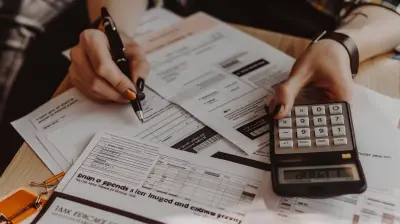
Forget the 50/30/20 rule. That is for people who are not in crisis. You are in crisis mode, so you need a zero-based budget. That means every single dollar you earn has a specific job before the month begins. You assign income to expenses, savings, and debt payments until the balance is zero. Not because you want to spend everything, but because you want to account for everything.Here is how you do it without losing your mind.
First, list your net income. That is what hits your bank account after taxes and deductions. Then list every fixed expense. Rent, utilities, insurance, minimum debt payments, groceries, transportation. Then list variable expenses. Eating out, entertainment, subscriptions, personal care. Be brutally honest. If you spend 200 dollars a month on coffee and snacks, write it down. Do not judge yourself. Just observe.
Now subtract your expenses from your income. If the number is negative, you have a problem that no budget can fix. You need to cut or earn. If the number is positive, you have a gap. That gap is your weapon. You are going to use it to attack your debt and build a buffer.
The key is to review this budget every single week. Not once a month. Every week. Why? Because a monthly budget is too slow to catch problems. If you blow your grocery budget in week one, you need to know by week two so you can adjust. Weekly reviews take fifteen minutes. They save you hundreds of dollars.

Step Two: Stop the Bleeding with a Spending Freeze
You cannot out-budget a spending habit. You need to stop the leak entirely for a short, painful period. A spending freeze is not a diet. It is a reset. You pick a period, usually 30 to 60 days, where you only spend on absolute necessities. Housing, utilities, food, transportation, minimum debt payments. Everything else stops. No subscriptions. No eating out. No new clothes. No impulse buys.Why does this work? Because it breaks the autopilot. Most paycheck-to-paycheck spending is not conscious. It is habitual. You buy lunch because you always buy lunch. You upgrade your phone because the new one is shiny. A freeze forces you to make a conscious decision for every single dollar. That awareness is the foundation of lasting change.
The downside is that a freeze is not sustainable. It is a sprint, not a marathon. So do not try to freeze for six months. You will fail and feel terrible. Do 30 days. Then evaluate. If you need another 30 days, do it. But give yourself permission to resume controlled spending after the freeze ends.
During the freeze, take every extra dollar and put it into a separate savings account. This is your emergency buffer. Not your debt. Your buffer first. I will explain why in the next section.

Step Three: Why You Need an Emergency Buffer Before Aggressive Debt Payments
This is where most financial advice gets it wrong. The standard advice is to throw every spare dollar at your highest-interest debt. That sounds logical. But it ignores human behavior and real life.Here is the scenario. You have 1,000 dollars in credit card debt at 22 percent interest. You also have zero savings. You decide to put 500 dollars a month toward the debt. You pay it off in two months. Great. But in month three, your car needs a 600-dollar repair. You have no savings. So you put it on the credit card. Now you are back to 600 dollars in debt, plus interest, plus the stress of the repair.
If instead you had built a 1,000-dollar emergency buffer first, the repair would not have touched your debt. You would have paid cash. The debt would stay paid off. The buffer is not a luxury. It is a shield that protects your debt payoff progress.
So here is the rule. Before you make any extra debt payment beyond the minimum, save 1,000 to 2,000 dollars in a separate account. This is your first line of defense. It is not your full emergency fund. It is just enough to cover the most common emergencies. A car repair. A medical copay. A replacement phone. Once you have that buffer, you can start attacking debt with everything you have.
The trade-off is that you will pay a little more interest during the buffer-building phase. That is the price of safety. And it is worth it because it prevents the debt spiral that happens when you have no cash and an emergency hits.
Step Four: Choose Your Debt Payoff Strategy Based on Psychology, Not Just Math
There are two main ways to pay off debt. The avalanche method and the snowball method. The avalanche method targets the highest-interest debt first. It saves you the most money in interest over time. The snowball method targets the smallest balance first. It costs you more in interest but gives you quick wins.The math says avalanche. The psychology says snowball. And psychology matters more than math when you are living paycheck-to-paycheck.
Here is why. When you are broke and stressed, you need to see progress. A small debt paid off gives you a dopamine hit. It makes you feel like you are winning. That feeling keeps you going. The avalanche method can take months before you see any debt disappear, especially if your highest-interest debt is also your largest. That delay can kill your motivation.
But the snowball method has a real cost. You might pay hundreds or thousands more in interest over the life of the debt. That is not trivial. So how do you choose?
Look at your personality. If you are highly disciplined and motivated by numbers, use the avalanche. If you are someone who needs visible wins to stay on track, use the snowball. There is no shame in either. The best strategy is the one you actually stick to.
A hybrid approach also works. Pay off the smallest debt first for the win, then switch to the avalanche for everything else. Or target the highest-interest debt that is also small. The point is to be intentional. Do not just pick a method because someone on the internet said so. Pick the one that matches your brain.
Step Five: Increase Your Income with a Temporary Side Hustle
You can cut expenses only so far. At some point, you hit the floor. If your income is 3,000 dollars a month and your fixed expenses are 2,900, no budget will save you. You need more money coming in.A side hustle is not a career change. It is a temporary bridge to get you out of the hole. Think of it as a second job that you work for 6 to 12 months. The goal is not to build a business. The goal is to generate an extra 500 to 1,000 dollars a month that goes directly to your debt or your buffer.
What should you do? Look at your skills. Can you drive for a rideshare service? Deliver food? Do freelance writing or graphic design? Tutor? Walk dogs? Clean houses? Sell unused items online? The best side hustle is the one that pays the most per hour and does not burn you out.
Here is the key. The side hustle money should be treated as untouchable. It goes to debt or savings. Not to lifestyle. If you start earning an extra 800 dollars a month and immediately upgrade your cable package, you have failed. The side hustle only works if the money has a specific job.
The downside is exhaustion. Working 50 or 60 hours a week is not sustainable forever. That is why this is temporary. Set a clear goal. For example, I will work this side hustle until I pay off 5,000 dollars of debt or build a 3,000-dollar buffer. Once you hit that goal, you can stop or scale back.
Step Six: Negotiate Everything, Especially Interest Rates
Most people never ask for a lower interest rate. That is a mistake. Credit card companies and lenders are in the business of collecting money. But they also want to avoid the cost of collections. If you are a customer in good standing, you have leverage.Call your credit card company and ask for a lower APR. Be polite but direct. Say something like, I have been a customer for X years. I have a balance of Y. I am considering a balance transfer to a lower-rate card. Can you lower my rate to keep my business? You would be surprised how often this works.
The same applies to other bills. Call your internet provider and ask for a promotional rate. Call your insurance company and ask for discounts. Call your gym and ask if they have a lower membership tier. Every dollar you save on a recurring bill is a dollar you can put toward debt.
The key is to do this regularly. Once a year, set aside an hour to review all your recurring bills and negotiate. This is not a one-time event. It is a habit.
Step Seven: Automate Everything to Remove Willpower from the Equation
Willpower is a finite resource. You use it all day at work, with your family, and on small decisions. By the time you get to your finances, you are exhausted. That is why automation is your best friend.Set up automatic transfers from your checking account to your savings account on payday. This is your buffer. Do the same for your debt payments. Pay more than the minimum automatically. If you never see the money in your checking account, you are less likely to spend it.
The trick is to automate the right amount. If you automate too much, you will overdraft and give up. If you automate too little, you will not make progress. Start with a small amount, like 50 dollars a week, and increase it every month by 10 or 20 dollars. This gradual ramp-up is easier to handle than a sudden jump.
Automation also removes the emotional decision. You do not have to decide every month whether to pay extra on your debt. It just happens. That is powerful because it turns a hard decision into a routine.
Common Mistakes That Keep You Stuck
Let me tell you what not to do. These are the mistakes I see over and over again.First, using a balance transfer card without a plan. A 0 percent balance transfer can save you money on interest. But if you do not pay off the balance before the promotional period ends, you will get hit with deferred interest. That can be worse than your original rate. Only use a balance transfer if you have a clear payoff timeline and you are disciplined enough to stick to it.
Second, consolidating debt without changing your spending. Debt consolidation just moves the debt around. It does not fix the behavior that created the debt. If you consolidate and then keep using credit cards, you end up with two debts instead of one.
Third, skipping the emergency buffer. I already covered this, but it bears repeating. Without a buffer, your debt payoff plan is fragile. One small emergency can undo months of progress.
Fourth, trying to do everything at once. You cannot build a buffer, pay off debt, save for retirement, and start a side hustle in the same month. You will burn out. Focus on one thing at a time. Build the buffer first. Then attack the debt. Then build a full emergency fund. Then increase retirement contributions.
Fifth, comparing yourself to others. Your friend who makes 100,000 dollars a year has a different situation than you. Your neighbor who drives a new car might be drowning in debt. Do not let comparison drive your decisions. Focus on your numbers.
The Trade-Offs You Must Accept
Paying off debt while living paycheck-to-paycheck requires sacrifice. You have to accept that some things will be delayed. That is not a failure. It is a choice.You might have to delay a vacation. You might have to drive an older car. You might have to skip concerts and dinners out. You might have to say no to your kids when they ask for expensive things. That is hard. But it is temporary.
The trade-off is that you are buying your future freedom. Every dollar you put toward debt today is a dollar that will be yours to spend or save in the future. The pain is real, but the payoff is real too.
One trade-off that people often miss is the social cost. When you stop going out, some friendships will fade. That is okay. The people who matter will understand. The people who only want you around when you are spending money are not your friends.
Another trade-off is the opportunity cost. Money you put toward debt is money you cannot invest. If your debt has a 20 percent interest rate, paying it off is a guaranteed 20 percent return. That is better than any stock market return you can expect. So paying off high-interest debt is actually a smart investment.
When to Break the Rules
Every rule has exceptions. Here are a few situations where you should pause your debt payoff plan.If you have no health insurance, you need to address that first. A medical emergency can wipe out everything you have built. Look for affordable coverage through your employer or the marketplace.
If your job is unstable and you are at risk of layoff, build a larger buffer before aggressive debt payments. You need three to six months of expenses in cash before you start throwing everything at debt. The risk of job loss is too high to ignore.
If you have a high-interest payday loan, that is an emergency. Pay that off first, even before building a buffer. The interest rates on payday loans are predatory, often exceeding 300 percent. Getting rid of that is your top priority.
If you are behind on essential bills like rent or utilities, fix that before anything else. A roof over your head and heat in the winter are more important than debt payoff. Do not let a credit card payment come before your mortgage.
The Long Game: Building a Life Without Paycheck-to-Paycheck
Once you have paid off your debt and built a buffer, do not stop. The goal is to create a permanent gap between income and expenses. That gap is your freedom.Start by building a full emergency fund of three to six months of expenses. This is your safety net. It protects you from job loss, major repairs, and medical issues. Without it, you are always one bad month away from going back into debt.
Then start investing. Even a small amount, like 50 dollars a month, can grow significantly over time. The earlier you start, the more time compound interest has to work. Do not wait until you have a lot of money. Start with what you have.
Finally, increase your income over time. This does not mean working more hours. It means developing skills that make you more valuable. Take a course. Get a certification. Ask for a raise. Change jobs if you have to. Your income is not fixed. You can grow it.
A Realistic Example
Let me give you a concrete example. Sarah earns 3,500 dollars a month after taxes. Her fixed expenses are 2,800 dollars. That leaves 700 dollars of gap. She has 8,000 dollars in credit card debt at 19 percent interest.Her first move is to build a 1,000-dollar buffer. She cuts her variable spending from 500 to 300 dollars a month. That frees up 200 dollars. She also starts a side hustle that brings in 400 dollars a month. Now she has 1,100 dollars a month to work with.
She puts 500 dollars into her buffer. In two months, she has 1,000 dollars. Now she switches to debt payoff. She uses the snowball method and pays off her smallest card first. That takes three months. Then she attacks the next one. She keeps the side hustle going for eight months total. By month ten, her credit card debt is gone.
Now she has 1,100 dollars a month of free cash flow. She builds a full emergency fund of 10,500 dollars over the next ten months. Then she starts investing 300 dollars a month and keeps the rest for lifestyle upgrades.
Sarah is no longer living paycheck-to-paycheck. She has a buffer, no debt, and a growing investment account. The key was not a magic trick. It was a combination of cutting expenses, increasing income, and staying disciplined for about two years.
Final Thoughts
Living paycheck-to-paycheck while paying off debt is a grind. It is not fun. It requires sacrifice and discipline. But it is not impossible. You just need a plan that respects reality.Build a buffer first. Then attack the debt with a strategy that fits your personality. Cut expenses hard, but not to the point of misery. Increase income with a temporary side hustle. Automate everything. Negotiate your bills. Avoid the common mistakes. Accept the trade-offs.
And remember, this is temporary. The pain you feel now is the price of the freedom you will have later. Every dollar you pay toward debt is a brick you are removing from a wall that is blocking your future. Keep going. The wall will come down.
all images in this post were generated using AI tools
Category:
Paying Off DebtAuthor:

Knight Barrett
Discussion
rate this article
2 comments
Ivan McTigue
This article offers practical tips that feel achievable. It's inspiring to see a clear path toward financial stability while managing debt. I'm looking forward to trying these strategies in my own life.
September 25, 2026 at 10:47 AM
Bella Coleman
Breaking the cycle takes strategy and discipline. Prioritize needs, cut unnecessary spending, and watch your savings grow.
September 13, 2026 at 10:42 AM
Knight Barrett
Absolutely, a focused approach makes all the difference. Prioritizing and cutting back can really pave the way to financial freedom.