How Global Trade Tensions May Affect Market Stability
2 September 2026
There is a quiet hum beneath every market chart, every earnings call, every central bank press release. It is the sound of goods moving across oceans, of containers stacked on decks, of semiconductors crossing borders three or four times before they land in a phone. Trade is not a sector. It is the circulatory system of the global economy. And when that system develops a blockage, the patient feels it everywhere, from the factory floor to the pension fund.
Trade tensions are not new. Tariffs, quotas, and sanctions have existed as long as nations have. But the current era feels different, not because the tools are new, but because the scale is. The world spent three decades building supply chains that assume frictionless borders. Now, those assumptions are being tested in real time. The question is not whether trade tensions will affect market stability. They already do. The real question is how deep the effects run, which parts of the market are most exposed, and what investors can actually do about it.
The Anatomy of a Tension
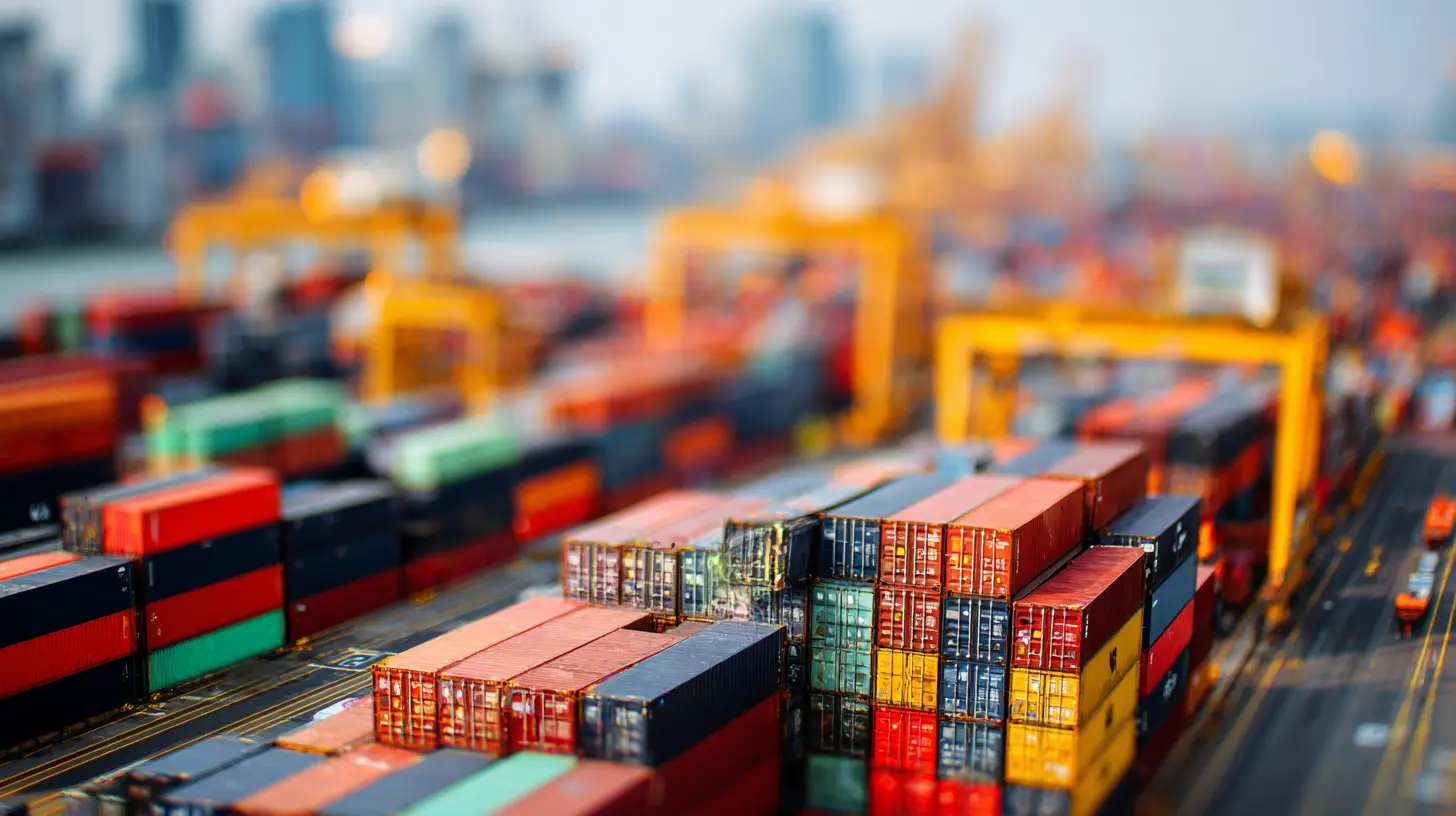
Before diving into market mechanics, it helps to understand what trade tensions actually are in practice. A tariff is not just a tax. It is a signal. When a government imposes a duty on steel, it is telling domestic producers that they are protected, and foreign producers that they are not welcome. That signal ripples through corporate planning. A company that built a factory in Vietnam to serve the American market may suddenly find its cost structure upside down.Trade tensions also include export controls, which are more precise and often more damaging. When a country restricts the sale of advanced chips or rare earth minerals, it is not raising the price of a good. It is cutting off the supply entirely. That is a different kind of shock, one that cannot be absorbed by simply paying more. It forces redesign, substitution, or in the worst cases, abandonment of product lines.
Then there are the softer tensions: threats of tariffs, lengthy investigations, retaliatory announcements. These do not change the flow of goods on day one. But they change the flow of capital. Businesses delay investment. They hold cash. They renegotiate contracts with clauses that account for sudden policy shifts. This uncertainty is often more corrosive than the actual tariff, because it stops decisions from being made. And markets run on decisions.
The Direct Market Channels
The most obvious channel is corporate earnings. Companies that rely on imported inputs see their margins compress when tariffs rise. This is not uniform. A company that sources 80 percent of its components from abroad and sells domestically faces a very different situation than a company that manufactures locally and exports. The first sees costs rise. The second may see demand fall if its customers are abroad and facing their own tariffs.Take the automotive industry as an example. A car built in North America today might have parts from Japan, Mexico, Germany, and South Korea. A tariff on any one of those inputs raises the cost of the final vehicle. If the tariff is broad, the auto company has few options. It can eat the margin, pass the cost to the consumer, or try to shift its supply chain. All three take time. In the meantime, the stock price reflects the uncertainty, often dropping more than the actual financial impact justifies, because markets price fear, not just math.
Exporters face a different problem. When a country is targeted by tariffs, its exporters lose price competitiveness. If the currency does not weaken to compensate, volumes fall. This hits sectors like agriculture, machinery, and consumer electronics particularly hard. Farmers in the American Midwest learned this during the soybean disputes with China. The tariffs did not just lower revenue. They changed planting decisions for years afterward.
The Indirect and Often Ignored Effects
The direct effects are easy to model. The indirect effects are where the real danger lies. Trade tensions change the cost of capital. When a country becomes seen as protectionist, foreign investors demand a higher risk premium. That raises the cost of borrowing for every company in that country, not just those directly exposed to trade. This is a slow, creeping effect, but it is powerful. A 0.5 percent increase in the cost of capital can wipe out the present value of years of growth for a young company.Another indirect effect is the shift in currency markets. Trade tensions often lead to currency depreciation in the targeted country, as demand for its exports falls and capital flows out. A weaker currency can help exporters, but it hurts importers and raises inflation. Central banks then face a dilemma. Do they raise rates to defend the currency, which slows growth, or do they cut rates to support the domestic economy, which accelerates the currency decline? This is the kind of impossible choice that creates volatility.
There is also the effect on supply chain financing. When trade routes become uncertain, companies build buffer inventories. That ties up working capital. It also costs money to finance. Smaller companies feel this most acutely, because they do not have the balance sheets to absorb a 30 percent increase in inventory holding costs. They may cut production, lay off workers, or delay expansion plans. The sum of these small decisions is a slowdown in economic activity that shows up in GDP data months later.
The Role of Central Banks and Policy Response
Central banks are not neutral observers in this process. They are forced to respond to the inflation that tariffs create, even when that inflation is not demand-driven. A tariff on imported goods raises prices. That is a one-time price level shift, not a sustained increase in the inflation rate. But central banks cannot always distinguish between the two in real time. If they overreact and raise rates too aggressively, they risk triggering a recession. If they underreact, inflation expectations may become unanchored.The Federal Reserve, the European Central Bank, and the Bank of Japan have all faced variants of this problem in recent years. Their communications have become more cautious, more data-dependent, and less forward-looking. This itself creates market instability, because investors crave predictability. When central banks stop giving clear guidance, every data release becomes a coin flip. Volatility indexes rise. Option premiums expand. Liquidity thins.
There is also the question of coordinated action. In past crises, central banks have worked together, swapping currencies and opening credit lines. Trade tensions are different because they are often deliberate policy choices, not external shocks. A central bank cannot swap its way out of a tariff war. It can only manage the consequences. This makes the policy response less effective and more reactive, which markets do not like.
Sector-Specific Vulnerabilities
Not all industries are created equal when it comes to trade exposure. Technology is the most obvious casualty, because its supply chains are deeply globalized. A single smartphone contains components from over a dozen countries. Export controls on semiconductors, or on the machinery used to make them, can halt entire production lines. The strategic importance of chips has made them a geopolitical weapon, which means the sector will remain in the crosshairs for the foreseeable future.Agriculture is another vulnerable sector, but for different reasons. Crops are perishable and seasonal. A farmer cannot simply reroute a shipment of soybeans to another country if a trade deal collapses. The market for agricultural goods is local in a way that the market for microchips is not. This makes agricultural prices highly sensitive to trade policy announcements. A single tweet can move the price of wheat by 5 percent in a day.
Financial services are less directly exposed, but they carry the risk of the rest of the economy. Banks lend to manufacturers, insurers cover shipping risks, and asset managers hold the equity and debt of multinational companies. When trade tensions rise, the financial sector does not fall first, but it falls eventually. The question is whether the losses are contained or whether they spread through leverage and interconnectedness into a broader credit event.
Healthcare and defense are often seen as safe havens, but this is a misconception. Pharmaceutical companies rely on active pharmaceutical ingredients from India and China. A disruption in that supply chain is not just a business problem. It is a public health emergency. Defense companies, meanwhile, are exposed to rare earth minerals and specialized alloys that are controlled by a small number of countries. So-called safe sectors are only safe until they are not.
The Misconception of Decoupling
A common narrative is that the world is decoupling, that supply chains are moving away from China, and that this will reduce vulnerability to trade tensions. The reality is more complex. Some production has shifted to Vietnam, Mexico, and India. But this is not decoupling. It is diversification. The goods still cross borders. The supply chains are still global. They are just routed differently.True decoupling would mean producing and consuming within the same economic bloc, with minimal reliance on external trade. That is not happening at scale. Even the most advanced economies still import critical inputs. The cost of building a fully self-sufficient supply chain is prohibitive for all but the largest nations, and even they would face enormous inefficiencies. The world is not decoupling. It is reorganizing, and reorganization creates uncertainty.
This matters for investors because the expectation of decoupling leads to overconfidence. If you believe that a company is insulated from trade tensions because it has moved its manufacturing to Mexico, you may be surprised when the United States imposes tariffs on Mexican goods. The lesson is that no country is a permanent safe harbor. Trade policy is dynamic, and so are the risks.
Practical Advice for Investors
The first step is to stop treating trade tensions as a single event. They are a process that unfolds over years. This changes the investment framework. You are not looking for a quick trade on a headline. You are positioning a portfolio for a world in which trade policy is a persistent source of volatility.Diversification remains the most reliable tool, but it must be geographic and sectoral. A portfolio that holds only American large-cap technology stocks is not diversified, no matter how many individual names it holds. It is a concentrated bet on one sector and one regulatory environment. Adding international equities, especially in emerging markets, provides exposure to different trade dynamics. But this also adds currency risk, which must be managed.
Hedging is another option, but it is not for everyone. Currency forwards, options, and futures can protect against adverse moves, but they cost money and require constant monitoring. For most individual investors, the cost of hedging outweighs the benefit. A simpler approach is to hold a mix of assets that naturally offset each other, such as equities and government bonds, or domestic and international holdings.
Cash is an underappreciated asset in times of trade tension. It gives you the ability to act when opportunities arise. It also reduces the stress of watching your portfolio decline. But holding too much cash has a cost. Inflation erodes purchasing power, and you miss out on gains when the market recovers. The right amount of cash is a personal decision, but it should be large enough to cover living expenses for at least a year, and small enough that you are not constantly worried about missing out.
A Realistic View of What Comes Next
It is tempting to predict the end of trade tensions, to imagine a return to the open, rules-based system of the 1990s and 2000s. That is unlikely. The political incentives that drive protectionism are strong and durable. Voters in many countries have seen their wages stagnate and their industries decline, and they blame trade. Whether that blame is justified is beside the point. It is politically powerful.The more realistic scenario is a world with higher trade barriers, more regional agreements, and greater volatility. This does not mean the end of globalization. It means a different kind of globalization, one that is more fragmented, more complex, and more expensive. Companies that can navigate this complexity will thrive. Those that cannot will struggle. The same applies to investors.
The market stability of the future is not the stability of predictability. It is the stability of a system that can absorb shocks and continue functioning. That is a lower bar, but it is also a more honest one. Trade tensions will not disappear. They will evolve. The question is whether we can build financial systems that are resilient enough to withstand them.
The answer is yes, but not automatically. It requires active management, realistic expectations, and a willingness to adapt. It requires understanding that the world is not safe, but it is navigable. And it requires accepting that the price of stability is constant vigilance. The markets have always been a reflection of human behavior, with all its fear, greed, and short-sightedness. Trade tensions are just the latest expression of that truth. The investors who do well are not the ones who predict the future. They are the ones who prepare for it.
all images in this post were generated using AI tools
Category:
Market AnalysisAuthor:

Knight Barrett
Discussion
rate this article
2 comments
Jane Kirk
Global trade tensions aren't just barriers; they reflect deeper economic interdependencies. As nations grapple with policies, the ripple effects can compromise market stability, revealing how fragile our interconnected systems are. We must prepare for the unexpected consequences of these geopolitical shifts.
September 9, 2026 at 3:05 AM
Knight Barrett
You're right. The complexities of trade tensions highlight just how intertwined our economies are. It's crucial we stay vigilant and adaptable in the face of these shifts.
Gisela Carter
This article highlights crucial insights into how ongoing trade tensions can disrupt market stability. Monitoring these developments is essential for investors seeking to navigate financial risks.
September 8, 2026 at 8:56 AM
Knight Barrett
Thank you for your comment. It's vital for investors to stay informed, as these trade tensions can significantly impact market dynamics.