How Couples Can Pay Off Debt Without Fighting About Money
7 August 2026
Money is one of the last great taboos. You will happily tell a stranger at a dinner party about your cholesterol numbers, your mother-in-law's opinions, or your suspicious mole. But ask a couple how much credit card debt they carry, and suddenly everyone is very interested in the wine list.
The irony is that most couples do not fight about money because they are broke. They fight because they are scared, and fear makes people behave badly. Debt is just the physical manifestation of that fear. It sits in your joint checking account like a heavy, judgmental houseguest who eats all the snacks and criticizes your life choices.
The good news is that paying off debt together does not have to be a blood sport. It can actually be the thing that makes your relationship stronger, provided you stop treating your combined finances like a hostage negotiation and start treating them like a project you both actually want to win.
This guide is not about spreadsheets, although we will get to those. It is about the psychology, the communication, and the surprisingly simple systems that let two adults with different money personalities tackle debt without turning their kitchen table into a war crimes tribunal.
The Real Reason You Fight About Money
Here is a truth that financial advisors rarely put on a brochure: most money fights are not about money. They are about control, identity, and fear of the future.When your partner buys a $400 espresso machine right after you agreed to a "no fun spending" month, you do not get angry about the espresso machine. You get angry because it feels like they do not respect the plan. It feels like they do not respect you. It feels like you are the only adult in the room, and that is a lonely place to be.
Meanwhile, your partner is not thinking about the espresso machine either. They are thinking about how they work hard, how they never get to buy anything nice, and how you have been checking the joint account like a hawk for three weeks. They feel micromanaged. They feel treated like a child. And nobody responds well to being treated like a child, least of all a grown adult who just wanted a decent cup of coffee.
So the fight is never about the coffee. It is about respect, autonomy, and the unspoken question that hangs over every joint financial decision: "Do you trust me?"
Until you answer that question honestly, no budget in the world will save you. You can have the most elegant debt snowball in history, and you will still end up sleeping on opposite sides of the bed because someone bought a scented candle.
Step One: Stop Hiding Your Debt
Before you can fix a problem, you have to admit it exists. This sounds obvious, but you would be shocked at how many couples maintain separate credit cards precisely so they do not have to talk about them.The "what they do not know cannot hurt them" approach to marriage is a ticking time bomb. It works beautifully right up until the moment the mail arrives with a collection notice, or you try to refinance your mortgage, or your partner finds the statement you accidentally left in the car. Then it becomes a breach of trust that is far more damaging than the debt itself.
Here is the uncomfortable truth: if you are hiding debt from your partner, you are not protecting them. You are protecting yourself from their reaction. And that is a very different thing.
The fix is simple, but not easy. Sit down and show each other everything. Every credit card, every personal loan, every Buy Now Pay Later plan you thought was "not really debt." Student loans count. That furniture financing with the zero percent interest that ends in six months? That counts too. The money you borrowed from your parents? Absolutely counts.
You do not need to do this in one dramatic evening. You can do it over a weekend. But you do need to do it completely. Partial transparency is just lying with extra steps.
A practical way to start: agree to exchange your credit reports with each other. This is not about spying. It is about getting a complete picture. You can each pull your free annual credit report and go through them together. It is awkward for about fifteen minutes, and then it becomes oddly liberating. Once everything is on the table, you can stop guessing and start planning.
Step Two: Separate the Numbers from the Emotions
Once all the debt is visible, the next mistake most couples make is trying to "feel" their way out of it. They make decisions based on anxiety, guilt, or a vague sense that they should be doing something.Feelings are useful for many things. They are terrible CFOs.
You need to separate the emotional weight of the debt from the mathematical reality of the debt. This does not mean you should ignore how the debt makes you feel. It means you should acknowledge those feelings, write them down, and then park them for a moment so you can look at the actual numbers.
Here is an exercise that works well. Get a piece of paper and write down every debt with three columns: the balance, the interest rate, and the minimum payment. Do not judge the debt. Do not assign blame. Just list it like you are cataloging items in a storage unit.
What you will likely find is that your debt is not one big scary monster. It is a collection of individual obligations, some of which are manageable and some of which are out of control. That $5,000 credit card at 29% interest is a very different animal from the $20,000 student loan at 4%. They both need to be paid, but they do not need to be treated the same way.
This is where the famous debt snowball and debt avalanche methods come in. The snowball method has you pay off the smallest balances first, regardless of interest rate, to get quick wins and build momentum. The avalanche method has you pay off the highest interest rate first, which saves you the most money over time.
Neither is objectively correct. The right method depends on your personality.
If you and your partner are motivated by progress and need to see results quickly, the snowball method is probably better. The psychological boost of eliminating a debt every few months is real and powerful. It keeps you engaged.
If you are both more analytical and can delay gratification, the avalanche method will save you more in interest. Over a few years, that difference can be substantial. But it requires patience, because your first few victories might take a while.
The key is to choose one method together and commit to it. Do not switch halfway through because you read an article that said the other way is better. The best debt payoff plan is the one you actually stick to.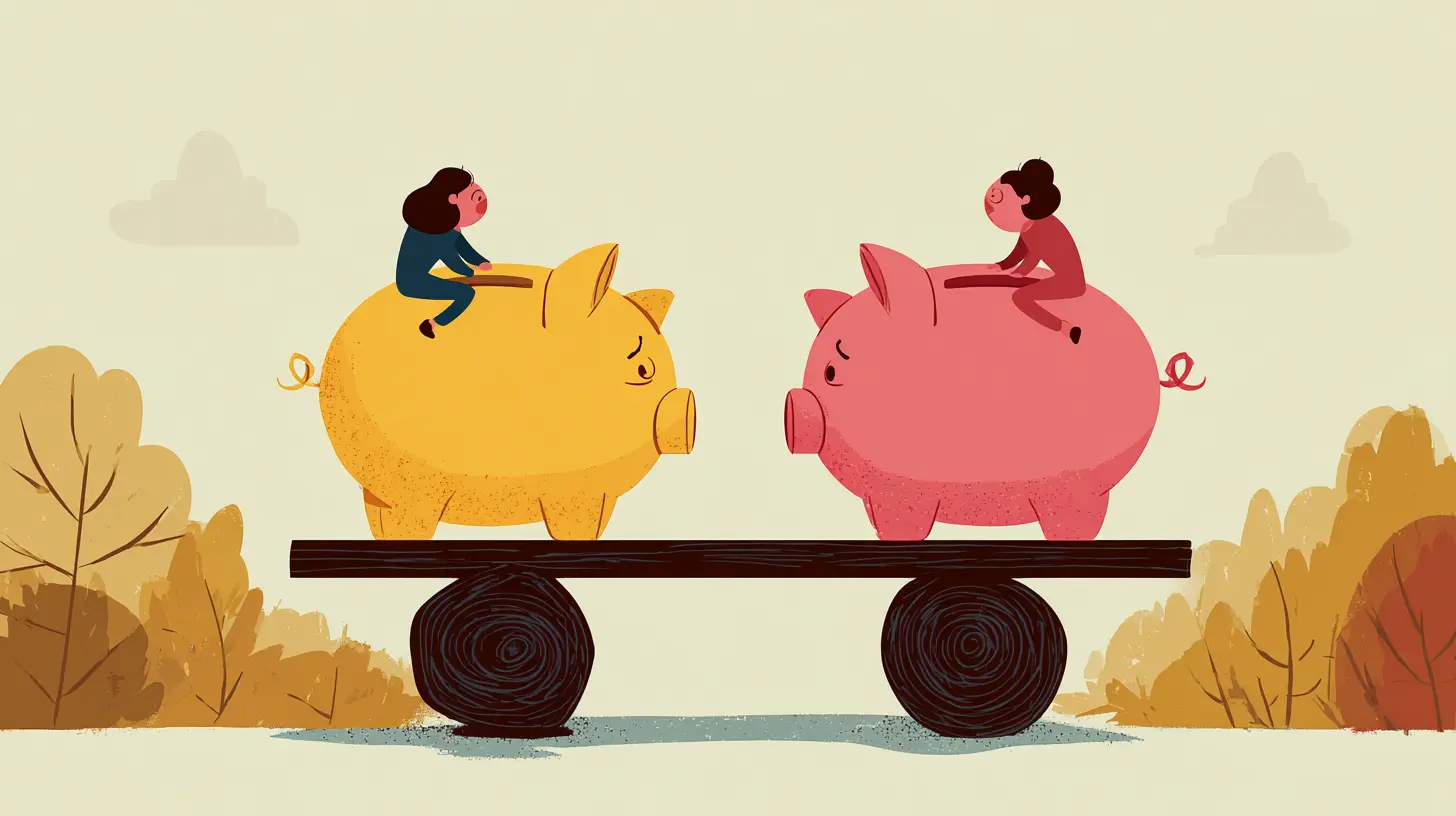
Step Three: Create a "No Blame" Budget
Budgets get a bad reputation because most people treat them like diets. They are restrictive, punitive, and designed to make you feel bad about everything you enjoy.A good budget is not a diet. It is a spending plan that reflects your shared priorities.
Here is the difference. A diet says, "You cannot eat cake." A spending plan says, "We have $100 a month for fun, and we can spend it on cake, movies, or a very small llama. Your choice."
When you create a budget together, you are not policing each other. You are agreeing on rules in advance, which means you do not have to have a negotiation every time someone wants to buy something.
Start with your income. Then list your fixed expenses: rent or mortgage, utilities, insurance, car payments, minimum debt payments. Then list your variable expenses: groceries, gas, entertainment, eating out, subscriptions.
Here is the part most couples skip: give yourselves a "no questions asked" allowance. This is a small amount of money, say $50 to $150 a month each, that you can spend on anything you want without explaining or justifying it.
This allowance is not a luxury. It is a pressure valve. It prevents the resentment that builds when you feel like you cannot buy a coffee without a committee meeting. It also prevents the sneaky spending that happens when someone feels deprived.
The allowance should be equal for both partners, regardless of who earns more. This is important. If one person earns $100,000 and the other earns $40,000, but you both get $100 a month of fun money, you are signaling that the relationship is a partnership, not a transaction. If you tie fun money to income, you are creating a hierarchy that will eventually poison everything.
Step Four: Automate Everything That Can Be Automated
Willpower is a finite resource. You only have so much of it in a day, and if you spend it all resisting the urge to buy takeout, you will have nothing left when it comes time to make a debt payment.This is why automation is your best friend.
Set up automatic transfers for every debt payment. If your credit card company allows autopay, use it. If you have a personal loan, set up recurring payments. If you are paying off a friend or family member, set up a recurring transfer from your checking account to theirs.
The goal is to make paying off debt as passive as possible. You want it to happen without a conversation, without a decision, and without a moment where you think, "Maybe we should skip this month and use the money for something else."
You also want to automate your savings. Even if you are in debt, you should have a small emergency fund. This sounds counterintuitive, but it is essential. Without an emergency fund, any unexpected expense, a car repair, a medical bill, a broken water heater, will go straight onto a credit card. That is how you get into debt in the first place.
A good target is $1,000 to start. It is not enough to cover every disaster, but it is enough to cover most small ones. Once your debt is paid off, you can expand this fund to three to six months of expenses.
Automate your emergency fund contributions too. Even $25 a week adds up. The point is to make it automatic so you do not have to think about it.
Step Five: Schedule a Weekly "Money Date"
Here is a counterintuitive idea: the more often you talk about money, the less stressful it becomes.Most couples avoid talking about money because they only bring it up when there is a problem. The result is that money conversations become associated with conflict, anxiety, and defensiveness. You start to dread them.
The fix is to make money a regular, boring, scheduled topic. Pick a time once a week, say Sunday evening or Friday morning, and spend twenty minutes going over your finances together. This is not a time to fight. It is a time to review.
What you do during the money date is simple. Look at your spending for the week. Check your debt balances. Confirm that all your automated payments went through. Look ahead to the next week and see if there are any upcoming expenses that need planning for.
That is it. Twenty minutes. No drama.
The magic of this ritual is that it prevents surprises. There is no "we need to talk" moment because you already talked on Sunday. There is no hiding a purchase because you know you will have to explain it in the weekly review. And there is no panic when a bill arrives because you already saw it coming.
Over time, the money date becomes as routine as taking out the trash. It is not romantic, but it is peaceful. And peace is worth more than romance when you are trying to get out of debt.
Step Six: Celebrate the Small Wins
Paying off debt is a long game. If you have $30,000 in debt, it might take you two, three, or four years to eliminate it. That is a long time to wait for a celebration.So do not wait.
Set milestones and celebrate them. When you pay off your first credit card, go out for a nice dinner. When you hit the halfway point, take a weekend trip. When you make your final payment, throw a party.
The key is to make the celebrations proportional to the achievement. You do not need to spend $500 to celebrate paying off a $2,000 balance. A $40 dinner is fine. The point is to acknowledge progress and to make the process feel rewarding.
This is where many couples fail. They treat debt payoff like a punishment. They cut all fun spending, they live on beans and rice, and they are miserable for two years. Then they either give up or they finish and immediately go back into debt because they feel like they "deserve" a reward.
A sustainable plan includes joy. It includes small treats. It includes a life that is worth living while you are paying off debt, not just after.
Step Seven: Know When to Get Help
There is a limit to what you can solve with communication and spreadsheets. If your debt is overwhelming, if you are facing foreclosure or bankruptcy, or if you and your partner cannot have a conversation about money without it turning into a fight, it is time to get professional help.This help can come in two forms.
The first is a financial counselor or a debt management program. These organizations can negotiate with your creditors, consolidate your payments, and help you create a plan that is actually feasible. They are not a magic wand, but they can reduce the pressure and give you a structured path forward.
The second is a couples therapist or a financial therapist. If your money fights are really about trust, control, or past trauma, a spreadsheet will not fix that. You need to work on the relationship itself.
There is no shame in asking for help. In fact, it is a sign of maturity. You are acknowledging that this problem is bigger than your current skills, and you are willing to learn.
Common Mistakes That Will Sabotage You
Even with the best intentions, couples make predictable mistakes when trying to pay off debt. Here are the ones to watch out for.The first mistake is going too aggressive. Cutting every expense to zero might work for a month, but it is not sustainable. You will eventually crack and binge-spend. It is better to have a moderate plan you can stick to than an extreme plan you will abandon.
The second mistake is ignoring the "why." Why do you want to be debt free? Is it to buy a house? To retire early? To reduce stress? To be able to travel? If you do not have a compelling reason, you will lose motivation. Write your reason down and put it somewhere visible.
The third mistake is keeping separate accounts without a clear system. Some couples prefer separate accounts for autonomy, and that can work. But you need to be crystal clear about who pays for what, and you need to have a joint account for shared expenses. Vague agreements like "you get the groceries, I get the utilities" often break down because one person's utilities are three times the other person's groceries.
The fourth mistake is comparing your progress to others. Your friend paid off their debt in eighteen months. Your cousin just bought a house. Good for them. You do not know their full financial picture, and they do not know yours. Run your own race.
When One Partner Earns More (Or One Carries More Debt)
Money is one of the few topics where equality is not always fair. If one person earns significantly more, or if one person entered the relationship with significantly more debt, the math of "splitting everything 50/50" can feel deeply unfair.There are two schools of thought here.
The first is that all money is shared money. You combine your income, pay all expenses, and treat the debt as a joint problem. This works well when both partners are committed to the relationship as a long-term partnership. It removes the awkwardness of "your debt" versus "my debt" and creates a sense of teamwork.
The second is that you keep some financial separation. Each partner contributes a proportional share of their income to joint expenses, and the rest is theirs to manage. This works well when one partner has a lot of debt they want to handle themselves, or when there is a significant income disparity and the higher earner does not want to feel like a walking ATM.
Both approaches are valid. The important thing is that you agree on the approach and that you do not use it as a weapon.
If you are the higher earner, do not use your income as leverage in arguments. If you are the lower earner, do not use your partner's income as a reason to avoid contributing to the plan. The goal is to feel like you are on the same team, not like you are negotiating a prenuptial agreement every month.
The Long Game: What Happens After the Debt Is Gone
Paying off debt is not the finish line. It is the warm-up.Once your debt is gone, you will have a new problem: what to do with all the money that used to go to payments. If you are not careful, you will simply spend it. This is why many people who pay off debt end up back in debt within two years.
The solution is to redirect your former debt payments into savings and investments before you get used to having the extra cash. Increase your emergency fund. Max out your retirement accounts. Start saving for a house or a big trip.
The same systems that got you out of debt, automation, weekly money dates, a budget you both agree on, will keep you out of debt. The only difference is that the "debt payment" line in your budget now says "savings" or "investments."
This is also the time to revisit your relationship with money. The habits you built during the debt payoff, the communication, the transparency, the shared goals, these are the real gift. Debt was just the vehicle that forced you to develop them.
A Final Word on Patience
You will have bad months. You will have setbacks. You will have moments where you want to give up and just use the credit card because it is easier.That is normal. That is human. It does not mean you are failing.
What matters is what you do the next day. You get back on the plan. You have your weekly money date. You look at the numbers, and you remember that you are not just paying off debt. You are building a life where money is a tool, not a source of fear.
And if you can do that together, you will have something far more valuable than a zero balance. You will have a partnership that can handle anything.
all images in this post were generated using AI tools
Category:
Paying Off DebtAuthor:

Knight Barrett
Discussion
rate this article
1 comments
Benjamin McNaughton
Teamwork makes the dream work-let's tackle debt together happily!
August 11, 2026 at 2:54 AM
Knight Barrett
Absolutely! Teamwork is key to achieving financial goals. Let's support each other and make this journey enjoyable.