Cash Flow Secrets Every Entrepreneur Should Know
5 August 2026
Most entrepreneurs start a business believing that profit is the ultimate measure of success. They obsess over revenue, track gross margins, and celebrate when the income statement shows a healthy number at the bottom. Then the bank account runs dry, and they realize the uncomfortable truth: profit is an opinion, but cash is a fact.
You cannot pay suppliers with an accrual. You cannot meet payroll with a receivable that is due in 60 days. Cash flow is the oxygen of a business, and without it, even the most profitable company on paper will suffocate. This article is not about basic bookkeeping. It is about the hidden mechanics, the psychological traps, and the strategic decisions that separate entrepreneurs who survive from those who merely look successful for a while.

The Difference Between Profit and Cash Flow
The first secret is understanding that profit and cash flow are not just different numbers. They are different realities. Profit is calculated by matching revenues to the expenses that generated them, regardless of when money actually changes hands. Cash flow tracks the actual movement of money in and out of your account.Consider a simple example. You land a large contract worth 100,000 dollars. You deliver the work in month one. The client pays you in month four. Meanwhile, you have to pay your team, rent, software subscriptions, and subcontractors in months one, two, and three. Your income statement for month one shows a nice profit if you recognize the revenue. Your bank statement shows a growing hole.
This gap between profit and cash is where businesses die. The problem is not that the work is unprofitable. The problem is the timing. Many entrepreneurs confuse a profitable order with a cash-positive order. They accept terms that look good on paper but create a liquidity crisis in practice.
The fix is not to avoid all deferred payments. That would kill many good deals. The fix is to understand your cash conversion cycle and plan for it. The cash conversion cycle is the number of days between paying for your inputs and receiving payment for your outputs. If that cycle is longer than your cash reserves can support, you are not really in business. You are in a financing game that you are losing.

Why Revenue Growth Can Be a Trap
Growth is seductive. New clients, bigger orders, expanding into new markets. It feels like progress. But growth consumes cash before it generates it. Every new project requires upfront spending on materials, labor, marketing, and overhead. The revenue arrives later, if it arrives at all.A common mistake is to chase revenue without considering the cash intensity of that revenue. A service business that bills monthly and gets paid in 15 days has a very different cash profile than a manufacturing business that has to buy raw materials, hold inventory for 90 days, and then wait 60 days for payment from a large retailer.
The entrepreneur who scales too fast without securing a line of credit or a cash buffer is like a driver who floors the accelerator while staring at the fuel gauge. The engine roars, the speed increases, and then the car sputters to a stop on the highway. The business did not fail because of a lack of demand. It failed because of a lack of fuel.
The lesson here is not to avoid growth. It is to growth with a plan. Before you take on a large order, calculate the cash required to fulfill it. Add a cushion for delays. Then ask yourself where that cash will come from. If the answer is "from the revenue the order will generate," you have already made a fatal error.

The Timing Trap: When You Get Paid Matters More Than How Much
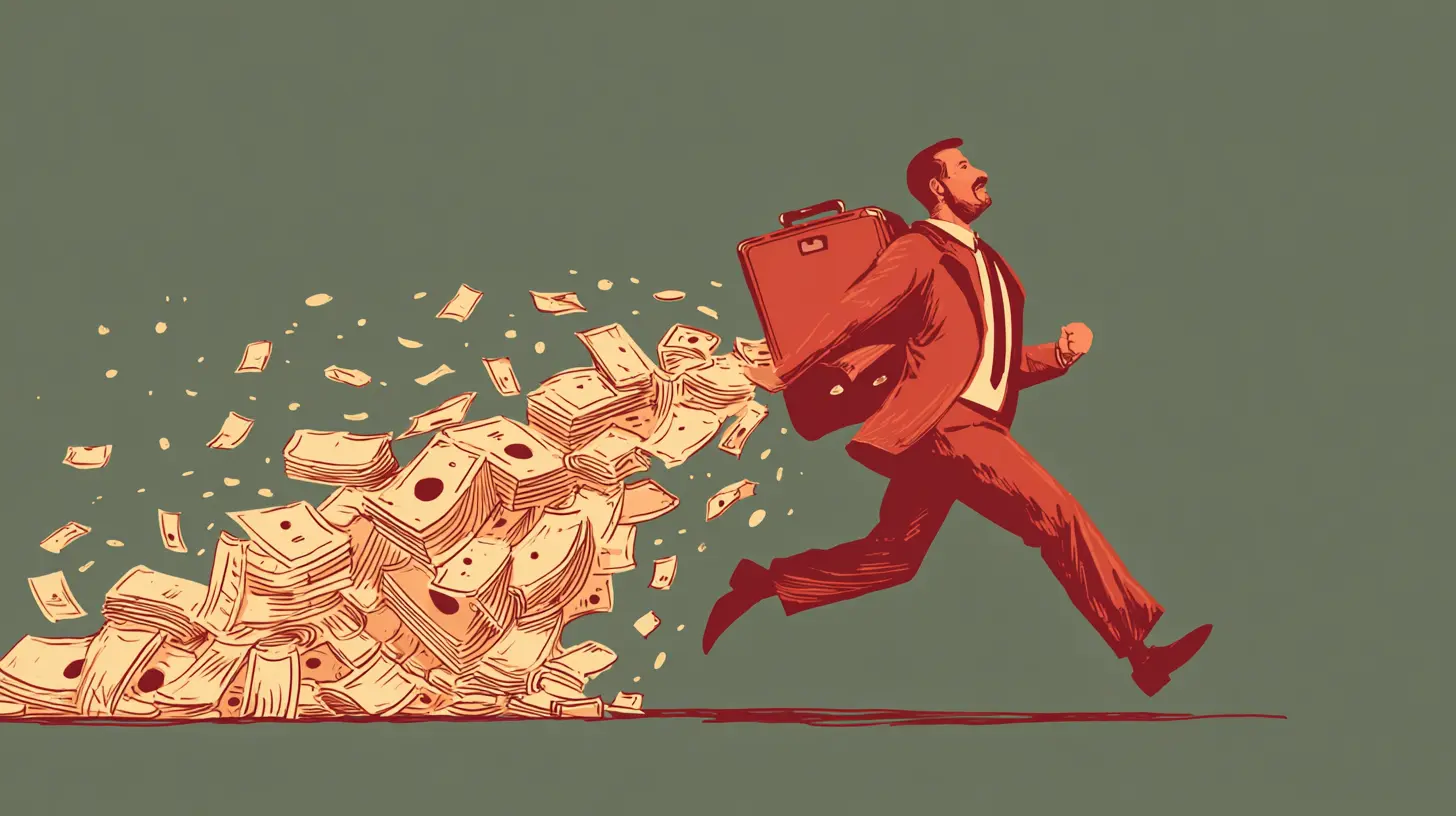
Many entrepreneurs negotiate hard on price but give away the farm on timing. They fight for a 5 percent price increase but accept payment terms of net 90 days without a second thought. That is backwards. The timing of cash is often more valuable than the amount.Think about what a 30-day delay in payment does to your business. If you have a 100,000 dollar invoice and you wait an extra 30 days to collect it, you are effectively lending your client 100,000 dollars for a month. At a 10 percent annual cost of capital, that is roughly 833 dollars in lost value. But the real cost is not the interest. It is the opportunity cost. That 100,000 dollars could have been used to take a discount from a supplier, to hire a salesperson, or to cover an unexpected expense.
The best entrepreneurs treat payment terms as a negotiable part of the deal, not a fixed condition. They ask for deposits, progress payments, and shorter terms. They offer small discounts for early payment. They make it easy for clients to pay by accepting credit cards and setting up automatic billing. They also do not hesitate to walk away from a deal that requires them to finance the client for an unreasonable period.
There is a difference between being flexible and being a bank. If you are not in the lending business, do not let your clients turn you into one without compensation.
The Hidden Danger of Inventory
Inventory is the silent killer of cash flow. It sits on your balance sheet as an asset, but it is cash that is locked up in boxes. The longer inventory sits, the more it costs you in storage, insurance, and obsolescence. And if the product goes out of style or becomes outdated, the inventory is worth less than what you paid for it.Entrepreneurs often overestimate their ability to forecast demand. They buy in bulk to get a discount, then discover that the market has moved on. The discount they received on the purchase is dwarfed by the cost of holding dead stock.
The solution is not to eliminate inventory. That is impossible for many businesses. The solution is to manage inventory with the same discipline you would apply to your bank account. Use just-in-time ordering where feasible. Negotiate with suppliers for smaller, more frequent deliveries. Track inventory turnover religiously. And be ruthless about liquidating slow-moving items, even if it means taking a loss. A loss on a sale is better than a slow bleed from holding costs.
The Accounts Receivable Problem
If inventory is the silent killer, accounts receivable is the loud one. You know the problem. You send an invoice, the client acknowledges it, and then the payment does not come. You send a reminder. You call. You get excuses. Meanwhile, your own bills are due.The root cause of most accounts receivable problems is not dishonest clients. It is unclear expectations. Many entrepreneurs do not set firm payment terms at the start of a relationship. They do not put late fees in their contracts. They do not follow up promptly because they are afraid of damaging the relationship.
That fear is misplaced. A client who respects you will respect your need to be paid on time. A client who does not respect that need is not a good client. The best practice is to make your payment terms explicit from the first conversation. Send the invoice immediately after the work is done. Include a clear due date. Automate reminders. And if a payment is late, do not wait 30 days to say something. Call on day one. The longer you wait, the harder it is to collect.
Some entrepreneurs also make the mistake of doing work before any money changes hands. They treat the first project as a trial, and they end up financing the entire engagement. A better approach is to require a deposit, especially for new clients or large projects. A deposit does not just protect you financially. It also filters out clients who are not serious.
The Power of Cash Flow Forecasting
Most entrepreneurs do not forecast cash flow. They look at their bank balance and hope. That is not a strategy. That is a gamble.A cash flow forecast is a simple tool that projects your cash position over the next 13 weeks. It lists every expected inflow and outflow, week by week. It accounts for payroll, rent, supplier payments, loan repayments, and expected customer payments. It also accounts for seasonality and known one-time expenses.
The forecast does not have to be perfect. It just has to be done. The act of writing down your expectations forces you to think about the future. It reveals gaps before they become crises. If you see that you will be short in week eight, you have time to arrange a line of credit, delay a purchase, or chase a receivable. If you wait until week eight to look, you are already in trouble.
Update the forecast every week. Compare it to actual results. The variance will teach you more about your business than any other single metric. You will learn that customers pay slower than you expect, that suppliers are less flexible than you hope, and that your own spending is more variable than you assume.
The Role of Credit and Debt
Debt is not inherently bad. It is a tool. The problem is that many entrepreneurs use it for the wrong reasons. They borrow to cover operating losses, which is like using a credit card to pay for groceries when you have no income. That is a spiral, not a solution.The right way to use debt is to fund investments that generate a return greater than the cost of the debt. That could be a new machine that increases production, a marketing campaign that brings in profitable customers, or a short-term loan to bridge a seasonal gap.
Before you borrow, ask yourself three questions. What is the money for? How will it be repaid? What happens if the plan does not work? If you cannot answer all three with confidence, do not borrow.
Also, understand the difference between a line of credit and a term loan. A line of credit is flexible. You draw on it when you need it and pay it back when you have cash. It is ideal for managing working capital fluctuations. A term loan is for a specific purchase with a fixed repayment schedule. Using a line of credit for long-term investments is a mistake because the payments are unpredictable and the interest rate is usually higher.
The Trap of Fixed Costs
Fixed costs are the enemy of cash flow flexibility. Rent, salaries, software subscriptions, insurance. They are the same every month, regardless of how much revenue you generate. When revenue dips, fixed costs do not dip with it. They crush you.Many entrepreneurs load up on fixed costs during good times. They hire more staff, sign longer leases, and buy fancier equipment. Then the market turns, and they are stuck with a cost structure that no longer matches their revenue.
The alternative is to keep as many costs variable as possible. Use freelancers instead of full-time employees where you can. Negotiate month-to-month leases instead of multi-year contracts. Pay for software on a usage basis rather than a flat fee. This approach gives you the ability to scale costs down quickly when revenue drops.
The trade-off is that variable costs are often more expensive per unit. A freelancer costs more per hour than a salaried employee. A month-to-month lease costs more per month than a long-term lease. But the premium you pay for flexibility is often worth it. It is the price of survival.
Why Cash Reserves Matter More Than You Think
Every business needs a cash buffer. The size of that buffer depends on your industry, your revenue stability, and your risk tolerance. But a good rule of thumb is to hold enough cash to cover three to six months of operating expenses. That is not just for emergencies. It is for opportunities.When a competitor is struggling and you can buy their assets at a discount, you need cash. When a key supplier offers a 20 percent discount for a bulk purchase, you need cash. When a great hire becomes available, you need cash. The entrepreneur who is always living on the edge of zero has no ability to seize these moments.
Building a cash reserve is not glamorous. It means paying yourself less, delaying a purchase, or turning down a growth opportunity that would drain your cash. But the peace of mind and the strategic flexibility it provides are worth more than any single deal.
The Psychology of Cash Flow
Cash flow problems are often not just financial. They are psychological. Many entrepreneurs avoid looking at their bank balance because it makes them anxious. They delay sending invoices because they do not want to seem pushy. They accept bad payment terms because they are afraid of losing the client.These behaviors are understandable, but they are destructive. The entrepreneur who avoids the numbers is not protecting themselves. They are making the problem worse. The longer you wait to face a cash crisis, the fewer options you have.
The best entrepreneurs develop a thick skin when it comes to money. They separate their self-worth from their bank balance. They understand that asking for payment is not rude. It is business. They also understand that a client who does not pay on time is not a friend. They are a liability.
Common Misconceptions About Cash Flow
One misconception is that cash flow problems are only for startups. Not true. Established businesses can have cash flow issues, especially if they are growing or if their industry is cyclical. A mature business that has become complacent about collections can find itself in trouble just as easily as a new venture.Another misconception is that cash flow is the same as profitability. It is not. You can be profitable and still go bankrupt. This happens all the time. A business that sells on credit, holds inventory, and has high fixed costs can show a profit on the income statement while running out of cash in the bank.
A third misconception is that the solution to cash flow problems is simply to make more sales. That is often wrong. More sales can make the problem worse if the new sales come with long payment terms or require additional upfront spending. The solution is often to improve the timing of cash, not just the volume.
Practical Steps to Improve Cash Flow Today
If you want to improve your cash flow, start with these actions. First, shorten your payment terms. If you currently offer net 30, try net 15. If you offer net 15, try requiring a deposit. Second, invoice immediately. Do not wait until the end of the month. The moment the work is done, the invoice should be sent.Third, follow up on late payments aggressively. Do not wait a week. Do not wait a month. Call on the day after the due date. Be polite but firm. Fourth, renegotiate with your suppliers. Ask for longer payment terms or discounts for early payment. The worst they can say is no.
Fifth, review your recurring expenses. Cancel subscriptions you do not use. Renegotiate your phone and internet bills. Shop around for insurance. These small savings add up. Sixth, consider offering a small discount for early payment. A 2 percent discount for payment within 10 days is often cheaper than the cost of borrowing.
The Long Game: Building a Cash-Flow Culture
The most successful entrepreneurs do not just manage cash flow. They build a culture around it. They train their team to think about cash in every decision. The sales team understands that a deal with bad payment terms is not a good deal. The operations team understands that holding excess inventory is a cost, not a benefit. The finance team understands that forecasting is not a bureaucratic exercise but a survival tool.This culture starts at the top. The entrepreneur sets the tone by talking about cash flow openly and regularly. They review the cash flow forecast with their team. They celebrate wins like collecting a large receivable early. They treat cash conservation as a key performance indicator, not an afterthought.
Over time, this culture becomes a competitive advantage. The business that manages cash well can outlast competitors, invest when others are retreating, and build trust with suppliers and lenders. It is not the most exciting part of entrepreneurship, but it is the most important.
Final Thoughts
Cash flow is not a topic you can learn once and forget. It is a discipline you practice every day. The entrepreneurs who master it do not have a special gift. They have a system. They forecast, they monitor, they follow up, and they make decisions with cash in mind.If you take one thing from this article, let it be this: profit is a scoreboard, but cash is the game. You can win the scoreboard and lose the game. Do not let that happen to you. Look at your numbers, understand your cycle, and make the hard choices now. Your future self will thank you.
all images in this post were generated using AI tools
Category:
Cash FlowAuthor:

Knight Barrett
Discussion
rate this article
1 comments
Hawk Wilkins
Cash flow can feel like juggling, but mastering it makes entrepreneurship so much more rewarding. These secrets might just be the keys to unlocking your business potential.
August 10, 2026 at 2:39 AM
Knight Barrett
Absolutely! Understanding cash flow is crucial. These insights can really help entrepreneurs thrive.